Showing posts with label List. Show all posts

7.15.2011

The Twenty Best Hip-Hop Albums of The '90s: A Retrospective


So it's been a crazy ass summer for all involved at SB, and we return from a month and a half long hiatus with... a list, and not even taking aim at another publication's online poll-influenced pile of failure this time.

No, this time the reasons are somewhat more personal. I was asked recently by an online acquaintance as to why we have so little hip-hop represented here despite our general embrace of everything under the fucking Sun. After all it's not like we dislike the genre--we had several excellent entries in our Best of the '00s list, including Can Ox, El-P and Madvillain. It's just that as a collective we don't listen to a whole lot of it, particularly the more recent stuff which outside the depths of the underground (and even there, too) seems to be rather hit or miss in terms of overall quality. If someone can enlighten us as to what we're missing, some more records in the past eleven or twelve years that flew under our radar, I'm sure we'd give em a shot.

However as a jaded country kid that grew up in the '90s with indiscriminate tastes and rediscovered just how awesome that decade was for hip-hop about eight years after the fact, this list was a long time coming; and even though I'm enabling this blog's addiction with putting things in a numbered sequence (".... hi, my name is Chris, and I'm a listaholic") I also hope to raise awareness for some fucking prime rap here, even if the selections are somewhat obvious to more educated heads.

Before I get started, some biases are freely admitted in the form of, you guessed it, another goddamn list:

a) I'm an East Coast kid, always have been.

b) As such, G-Funk is generally not my preferred production style.

c) I'm basing my selections on release date, not the timeframe in which they were recorded, so a couple albums here may be questionable as representative of the '90s.

d) I'm 27, white, and male.

e) I hold no particular reverence for '80s rap as a whole. Sure, I will rock your copies of Paid In Full, Nation of Millions, Critical Beatdown and even Paul's Boutique (see d) all day and all night, but the backpacker fetishizing of that era and putting down most '90s rap as "gangsta shit without a message" is kinda perplexing to me. You don't have to identify with or like the subject matter to see the genius involved in any of these albums and besides, most of those '80s records were hardly wholesome and/or conscious even by today's standards. A play of any Slick Rick or Kool G Rap will set you straight on that.

f) Eminem can shampoo my area.

Anyway, without further ado:

20. Company Flow- Funcrusher Plus (Rawkus Records, July 28, 1997)

"Independent as fuck"--rapper Bigg Jus, DJ Mr. Len and producer/MC El-Producto lived and died by this credo, and Funcrusher Plus reflects their cutting-edge ethos both in production and topic matter. Serving up a dramatically different slice of hip-hop from their contemporaries on the Rawkus label (whom they later had a catastrophic falling out with), Company Flow dealt in sinister paranoia and bleak dystopian imagery, along with shout outs to graffiti artists and intense battle raps all backed by the futuristic beats of El-P establishing the group at the top of the underground game. "8 Steps to Perfection," "The Fire In Which You Burn" and "Krazy Kings" all set a high standard for the strains of indie rap that would follow Co Flow's example, and El-P himself would go on to establish the excellent Definitive Jux label and push the bounds of hip-hop production even further.

19. The Pharcyde- Bizarre Ride II The Pharcyde (Delicious Vinyl, November 24, 1992)


One of the few West Coast groups of the era that didn't embrace the gangsta image, Pharcyde's classic debut places them in the same league as their East Coast counterparts De La Soul as court jesters of hip-hop. Slimkid, Imani, Bootie Brown and Fatlip sound like the four smartass kids you probably knew back in high school, trading in gleefully obnoxious, hilarious rhymes and playing the dozens with each other on "Ya Mama." However there's introspection here too, with "Passing Me By" and "On The DL" sincerely revealing self-effacing aspects of their personal lives that most rappers would never dream of doing. But positivity is largely the order of the day here and J-Swift's bouncy production only adds to the street corner vibe.

18. The Roots- Things Fall Apart (MCA, February 23, 1999)
Philly's resident hip-hop/neo soul band expanded from hometown heroes to a movement with their fourth album Things Fall Apart, with appearances from Common, Erykah Badu, Mos Def, Dice Raw and beatbox extraordinaire Scratch. Yet even with all the collaborators the album generally avoids feeling busy or top-heavy, with the live grooves of drummer ?uestlove underpinning the impressive wordplay and rhymes of Black Thought and Malik B. still being the central focus. The Grammy-winning "You Got Me" is one of hip-hop's few truly touching love songs, but head-spinning raps on "Double Trouble," "Step Into The Realm," "Adrenaline" and "Ain't Sayin' Nothin' New" prove that they haven't gotten too soft. Although Things Fall Apart has a fair amount of padding (including the obligatory middling spoken-word track), the album's highlights easily outweigh the cheese and live up to its reputation as the release that broke The Roots into the big time.

17. Jay Z- Reasonable Doubt (Roc-A-Fella, June 25, 1996)


Hova was always the consummate businessman and slick purveyor of mafioso rap even before the days he became a mogul, and his debut Reasonable Doubt reminds us of a time when he was hungry and rising to the top. Jay reflects back on both the good and bad times of criminal living with "Can't Knock The Hustle," "D'Evils," "Regrets" and "Dead Presidents II," while the Biggie-featuring "Brooklyn's Finest" and blistering "22 Two's" (my favorite on the album) prove that he was no slouch with a mic. With a slate of producers including Ski, Clark Kent and DJ Premier supplying excellent R&B and jazz-flavored production, this is Jay at both his most consistent and most musical, and the album everyone inevitably gravitates back to after listening to his less satisfying subsequent efforts.

16. Mobb Deep- The Infamous (Loud/RCA/BMG Records, April 25, 1995)
Unrepentantly brutal and nihilistic even by the standards of '90s gangsta rap, Havoc and Prodigy would have made it into the annals of hip-hop legend for only one track--the haunting "Shook Ones, Part II," the power of which needs little explanation. Even without that track, the rest of The Infamous lyrically paints grim pictures of an urban war zone, where no allegiances can be trusted and any day could be the one you're staring down a barrel of an enemy's nine. The Queensbridge duo make absolutely no apologies for their anti-life stances, and "Drink Away The Pain (Situations)" produced by and featuring a verse by Q-Tip may be the lightest they ever get. Not for weak stomachs, but unrelenting and masterful in its dark focus.

15. Common Sense- Resurrection (Relativity, October 25, 1994)


Common in the days before he dropped the Sense from his name and before he was tainted by lame neo-soul posturing and show business was Chi-Town's finest rapper, a thinking man's MC that preferred witty double entendre and metaphor through his smooth, sometimes half-sung delivery. "I Used to Love H.E.R.," an allegory of hip-hop's life from its humble beginnings through the Golden Age and the gangsta era is still one of the most widely admired and quoted tracks in all of hip-hop, and No I.D.'s piano-heavy gorgeous production on Resurrection lends a soulful vibe throughout. Even at the age of 22 Common had a maturity beyond his years, eschewing the usual hardcore posturing of the era for rap that attains the ideal of street poetry on a higher level than most of his contemporaries.

14. Big Punisher- Capital Punishment (Terror Squad/Loud Records, April 28, 1998)


Ok, so Capital Punishment suffers a bit from being skit-heavy and the production, despite a few hot beats dropped by big names like RZA and Dr. Dre, is more accomplished than impressive. But once the mightly Pun (R.I.P.), all 400+ pounds of him latched onto that beat, it was fucking over. Just listen to "Super Lyrical" (guest Black Thought of all people gets totally upstaged here), "Beware," "Deep Cover '98" and "The Dream Shatterer" where Big Pun's Bronx-bred, lightning fast battle rapping makes everyone else just sound lazy and sloppy. And when he turns his machine gun delivery down to suit slower club jams like "I'm Not A Player" ("... I just fuck a lot"), his humor and choice of phrase still comes through. With his Terror Squad mates and other guests like Wyclef, Inspectah Deck and Prodigy on board and all dropping in fine performances, this is one of the best Latino rap albums ever and a lyricist's treat.

13. Pete Rock & C.L. Smooth- Mecca and the Soul Brother (Elektra, June 9, 1992)


While their works were widely slept on by listeners at the time, the Mount Vernon NY duo of producer wunderkind Pete Rock and silky MC C.L. Smooth were dropping brilliant jazz/soul raps that were philosophical without being particularly Afrocentric, and street without being thug (C.L. had a early Rakim-esque aversion to profanity). Mecca and the Soul Brother was the best embodiment of their style, embarking on sixteen 4-6 minute bangers that never wear out their welcome, and what it lacks in distinct highlights (barring the soulful dirge and future genre staple "They Reminisce Over You (T.R.O.Y)") it makes up for in workmanlike consistency. There's not a single bad song or wack skit to be had, making this mandatory for fans of late Golden Age rap.

12. Cypress Hill- self titled (Ruffhouse/Columbia/SME Records, August 13, 1991)


Though they would later become West Coast hip-hop's resident Latino stoners, Cypress Hill's revolutionary debut is the only time they've managed to be hardcore and hilarious simultaneously. Bear witness to B-Real's adenoidal flow over the skronky guitar noise of "How I Could Just Kill A Man" and "Pigs" or the abrasive bump of "Hand On The Pump" which inspired hordes of copycats, while other tracks extolled the virtues of the good leaf with the deeply addled thump of "Stoned Is The Way of The Walk" and the more uptempo "Light Another" being highlights. It may sound a little dated now but Cypress Hill's debut still bangs with the best of them, and laid down a template for many West Coast groups to follow.

11. Outkast- Aquemini (LaFace/Arista, September 29, 1998)


As one of the founders of a nascent Southern hip-hop scene in the '90s, the duo of Andre and Big Boi brought something new and fresh to the table with their distinct ATL drawls, deep strains of instrumental blues, funk, reggae and soul meeting up in a huge melting pot and general rejection of the usual flossin' and shallow materialism that was legion among groups at the time. And with the third album Aquemini, they went from being regional heroes to one of the best groups in the country. While Outkast are no doubt nice with a mic and bring rhymes loaded with content and substance, they're less about the lyrics and more about verbally complementing the big, Southern fried grooves and varied beats as showcased perfectly by bangers "Rosa Parks" and "Skew It on The Bar-B." Along with the seven-minute slow funk centerpiece "SpottieOttieDopaliscious" and loud, wah-wah guitar heavy "Chonkyfire," Aquemini's earthy musical backdrop could speak for itself. Damn is this record beautiful.

10. Public Enemy- Fear of A Black Planet (Def Jam/Columbia, April 10, 1990)


After dropping one of the greatest hip-hop albums of all time in It Takes A Nation of Millions to Hold Us Back, Chuck D, Flavor Flav & Co. would suffer a long slide into irrelevance throughout the following decade as gangsta rap groups won acceptance over more socially conscious artists in the mainstream. But in 1990, P.E. were still at the top of the rap game and so was Fear of A Black Planet.

An angry, impassioned cry against racial inequality and the critics that began to take more shots at them after Minister of Information Professor Griff's antisemitic statements to the press, Fear of A Black Planet blasted myriad cultural enemies both new and old while cranking up the Bomb Squad's dissonant wall of sample-heavy noise to 11. Miscegenation (the title track, "Pollywanacracka"), Hollywood ("Burn Hollywood Burn"), record labels ("Who Stole The Soul?"), the media ("Welcome to the Terrordome") and even Elvis ("Fight The Power") all get hit by lyrical broadsides from Chuck, while Flav drops his most enduring track "9-1-1 Is A Joke" taking a lighter-hearted shot at the lack of police support in black neighborhoods. Amid the rage are calls for black unity like "Brothers Gonna Work It Out" and an urge to stop communities from cannibalizing themselves, making this a protest album that seeks to empower a staid and despondent black America as much as it targets the white status quo.

Unfortunately P.E. would never be this vital again, what with Flav clowning on reality shows and a lack of musical inspiration from the group they've become all but a pop culture joke in recent years. However albums like It Takes A Nation and Fear of A Black Planet make that reputation completely unwarranted and still sound visionary, urgent and powerful--the aural equivalent of a clenched, raised fist.

9. Ice Cube- Death Certificate (Priority/EMI Records, October 29, 1991)


Long before Ice Cube started showing up in cuddly family flicks like Are We There Yet?, he was one hostile motherfucker. Dropped less than a year prior to the Rodney King riots that ripped through L.A., Death Certificate is gangsta rap at both its most conscious and its angriest. Formerly the soul and brains of NWA, Cube's first two solo albums took on issues of race, poverty and government disenfranchisement from a street level perspective, facing down the white establishment with a uncompromising gaze. Switching from the hard beats of the Bomb Squad on Amerikkka's Most Wanted to a more West Coast-oriented, funk-intensive production, Death Certificate still loses absolutely nothing in terms of intensity or skill behind the mic.

The album is split into two sides--starting with the Death side, according to Cube a mirror image of where the black community was (and still is) and discussing inequality and depravity's ravages on the inner city, culminating in "Alive In Arrival," Cube narrating the story of a young man caught in a gang shootout and bleeding out in a hospital bed while being questioned by police. The Life side, "a vision of where we need to go," focuses on the racism of institutions ranging from the U.S. military to Korean shopkeepers and curing the black community through violent self-empowerment. And it's all capped with a scathing hit piece on NWA, "No Vaseline."

The source of much controversy upon release for its racial politics and brutal rejection of White America's social mores, Death Certificate is as pissed off as any punk or metal album and more focused than even Fear of a Black Planet, and whether you agree with Cube's fury or not it's hard to argue with the album's relevance as its targets persist even twenty years on.

8. Mos Def & Talib Kweli Are Black Star (Rawkus/Priority/EMI Records, August 26, 1998)


Named after Marcus Garvey's Black Star shipping line founded to repatriate blacks to Africa, seasoned conscious rappers Mos Def and Talib Kweli created a real milestone together--behold, an Afrocentric album that isn't preachy, isn't overly PC or corny (the love jam "Brown Skin Lady" being a possible if well-intentioned exception), isn't trying to scare white people away, and is fully in touch with the basics of rap and sharp performances behind the mic that keep this far away from boring radio fodder. It's the perfect happy medium.

A huge celebration of hip-hop and black culture as a whole, Mos and Talib draw from two decades of the genre, from the early B-boy days to the East v. West feud and life in the streets of Brooklyn circa '99 for their observations, taking on the deaths of Biggie and 2Pac in the Boogie Down Productions-referencing "Definition," and the anti-culture of nihilism and conspicuous consumption in "Thieves In The Night" (still one of hip-hop's most eloquent and incisive tracks) along with a funny and smart Mos remake of Slick Rick's classic joint "Children's Story."

Of course this wouldn't be a Mos/Talib venture without some fiery spitting, and there's plenty on "Re: Definition," "Hater Players" and posse cut "Twice Inna Lifetime" with awesome guest verses by Wordsworth and Jane Doe along with Common on "Respiration" adding to the wealth of lyricism on the album. Add catchy-ass beats from producers Hi-Tek, J. Rawls and 88 Keys and you have a pre-millennial classic. We're overdue for a reunion.

7. Raekwon- Only Built 4 Cuban Linx (Loud/RCA/BMG, August 1, 1995)
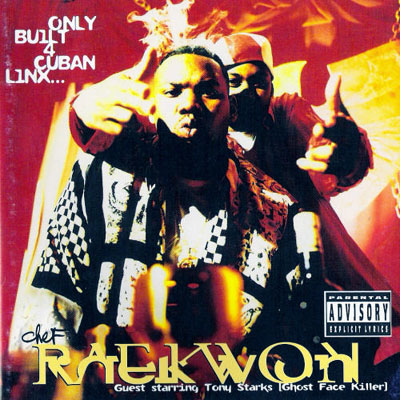

The first run of Wu solo albums was a watershed in hip-hop with RZA's stint in Gravediggaz and Ol' Dirty Bastard, Method Man and Ghostface all dropping classics. But only two releases enjoyed full RZA supervision behind the boards and rose to the level of masterpieces. Raekwon's Only Built 4 Cuban Linx was the first half of the pair, with Rae's intricate criminal narratives and Five Percenter knowledge accompanied by Ghostface Killah's stream of consciousness rapping and RZA's backdrop giving a big injection of life to the dying mafioso rap subgenre.

A loose concept album, Only Built 4 Cuban Linx is the tale of two gangsters returning to the drug game to make a quarter mil and get out before it kills them, and finding out it ain't so easy. Inspired by stellar source material like Once Upon A Time In America and John Woo's The Killer, "Incarcerated Scarfaces," "Gullotine (Swordz)," "Criminology," "Rainy Dayz" and "Heaven & Hell" feel like immaculately produced scenes from a crime film, and lighter cuts like "Ice Cream" and "Wu-Gambinos" (which started the group's trend of aliases) threw in defining performances from Method, Masta Killa and Cappadonna. Even Nas shows up and drops an epic verse on "Verbal Intercourse," which heads still often call his best performance on record. Ending with the closing credits roll of Popa Wu's "North Star," it all rounds up to one of the most complete experiences in hip-hop.

Yep, it's a Wu masterpiece, rivaled only by one other.

6. GZA- Liquid Swords (Geffen/MCA Records, November 7, 1995)
It's one of the hardest hip-hop debates of all time--Liquid Swords v. Only Built 4 Cuban Linx--and much ink has been spilled over the topic trying to figure out which of the two RZA-produced efforts is better. Here's my take: Raekwon's is a classic and undisputably equal to Liquid Swords in rapping and production, but GZA's has it all over Cuban Linx in one important category: Atmosphere.

This is by far the most consistently dark, somber album on the list and that quality along with The Genius' dominance on the mic makes it the perfect kingpin album, his thick Brooklyn baritone building elaborate and carefully constructed metaphors and tales of fucked up deals over icy strings and grim bass--all linked together by excerpts from Shogun Assassin. Even the other Clan members that show up seem completely attuned and sympathetic to the wavelength GZA and RZA are on, with Inspectah Deck's narrative verses on "Duel of the Iron Mic" and aptly titled "Cold World"; Ghostface's blast of free associating and religious imagery on "Investigative Reports" and "4th Chamber"; and Method Man's effortless boast-laden roll through "Shadowboxing."

In typical early Wu fashion, this is more of a group rallying around one member (and RZA) rather than a true solo effort, and yet GZA manages to put his own indelible stamp on the proceedings with tracks like "Labels," a vicious dissection of the record industry widely admired and imitated to this day (sample lyric: "TOMMY ain't my motherfuckin' BOY/When he fake moves on a nigga you employ/Well I'll EMIrge off ya set, now ya know God damn/I show LIVIN LARGE niggaz how to flip a DEF JAM"). For all the spectacular performances on here, there's no doubt Liquid Swords is GZA's show as the sharpest lyrical sword in the Clan.

5. Big L- Lifestylez ov da Poor & Dangerous (Columbia, March 28, 1995)
Big L is that "other Big" from NYC that seemed to get a lot less recognition outside serious hip-hop circles, and that's a damn shame as Lamont Coleman was easily one of the finest mic technicians in his generation, gifted with a cutting multisyllabic flow that runs circles around most rappers to this day. His unparalleled skills and nearly relentless barrage of over-the-top imagery lent him more to the world of hardcore battle rap than the relatively mellower (but just as violent) gangsta material of the day, which probably accounts for his profile under the mainstream radar.

One thing is certain, though: Big L is the undisputed master of punchlines, and he drops a treasure trove of them hilarious and hard hitting all over Lifestylez ov da Poor & Dangerous. "So don't step to this, cause I got a live crew/You might be kinda big but they make coffins yo' size too" ("All Black"); "My rap's steady slammin, I keep a heavy cannon/It's a new sherriff in town, and it ain't Reggie Hammond" ("Put It On"); "I'm looking nothing like your poppa/I wouldn't give a chick 10 cent to put cheese on a whoppa" ("No Endz No Skinz")--it goes on and on and on. But L wasn't just bragaddocio and bluster, he also dropped the occasional conscious track like "Street Struck" and let his pretty talented friends get a turn--seven of them--on "8 Iz Enuff." Verse for verse, song for song, he was probably the finest MC going and Lord Finesse's lo-fi but solid beats make excellent wallpaper for L's unrivaled flow.

For all the horrorcore posturing L was a rapper, not a gangsta; which made his death from a shooting in 1999 right before he signed to Roc-A-Fella and dropped another album all the sadder. No doubt he should've been a household name. In any case, there may be better, more versatile hip-hop albums out there but I can think of precious few that speak to my musical sensibilities or that I've listened to more than Lifestylez, and that is high praise indeed.

4. Notorious B.I.G.- Ready to Die (Bad Boy, September 13, 1994)


Maybe it's just my personal regional slant talking, but what separated NYC gangsta rap of the era from its Western equivalent was a sense of doom and fatalist gravity amid the bullets, drugs and misogyny. 2Pac (for all his unquestionable talents) and other Death Row rappers made the outlaw life sound like an invincible and calculated pose, something you do to pass the time between fucking hoes and smoking weed, whereas Biggie could lace his quotably toxic rhymes with grim humor, world weary struggle, paranoia and even vulnerability--sometimes all in the same song. Even at his most vulgar and ridiculous, Biggie always sounded real. Like Hemingway, he wrote (and rapped) what he knew about.

And Ready to Die showed Biggie at his peak, narrating the life of a rising gangster from birth to suicidal death with cinematic and emotional breadth. Perhaps the only rapper that can lend full life to the thick-like-molasses, sample heavy production by Easy Mo Bee and Sean Combs (ugh) Biggie flexes his lyrical ability, preferring a clear yet complex storytelling style over the rapid flows of most of his contemporaries in the East. All the better to lay down threatening yet hilarious lines like "There gonna be a lot of slow singin' and flower bringin' if my burglar alarm start ringin" in that rough baritone. Biggie is probably the most bit-on MC of all time, and it's not hard to figure out why. Anyone who can sum up twenty years of social decay and the crack epidemic with one track, "Things Done Changed" ("Back in the days our parents used to take care of us/Look at em now, they even fuckin' scared of us!") without turning preachy is truly next level. A cameo by Method Man on "The What" is just icing.

It's too bad his second album Life After Death went fully down the overproduced, more radio-friendly road this album hinted at with tracks like "Juicy," because there was definitely more life in Ready to Die's rawer, bleaker vein. It makes you wonder how much better Biggie would've been without Puff Daddy. Either way the death of Christopher Wallace in '97 was truly a loss and even the necrophiliac post-mortem releases do nothing to change Ready To Die's nearly flawless depiction of a hustler's struggle.

3. A Tribe Called Quest- The Low End Theory (Jive, September 24, 1991)
You knew you were going to see this one eventually.

Exemplars of the Native Tongues school of hip-hop, Q-Tip/The Abstract, Phife Dawg and producer/DJ Ali Shaheed Mohammed weren't militant like Brand Nubian, weren't goofy like De La Soul and weren't hippies like Digable Planets or Arrested Development. What they were was better than all of them put together, combining low-key consciousness with a skeletal but thumpin' production designed to move rumps and none of their albums embodied that ideal better than The Low End Theory. Spread across fourteen tracks of buttery flow, witty and smart yet not preachy lyricism and an aura of pure class is a feeling of effortless accomplishment and expertise that belies that the group was only on their second album.

Marry this honed sense of purpose to slick jazzified beats and thick basslines sported by the likes of "Jazz (We Got The)," "Excursions," "Check The Rhime" and "Verses from The Abstract" and you have perfection. And even the guest appearances on "Show Business" (Brand Nubian) and the classic closer "Scenario" (Leaders of the New School) are highlights, including a hot verse from a young Busta Rhymes on the latter. One of the best things that can be said about The Low End Theory is that it's an all-purpose album with a universal appeal that will hook the most casual of hip-hop heads, and even people who otherwise spell rap with a "c." It's the Kind of Blue of its genre, and there are few compliments higher than that.

2. The Wu-Tang Clan- Enter the 36 Chambers (Loud, November 9, 1993)


You're staring at the genesis of one of hip-hop's most enduring and idolized franchises; at LEAST ten solo careers and Christ knows how many other affiliates; an entire school of rapping and production; many additions to the hip hop lexicon; and even a clothing line. When you listen to Enter the 36 Chambers it's like an audio time capsule from an older world--a world caught sleeping by nine hungry young men, each a deft MC in his own right, forming like Voltron and stomping their way out of Shaolin with their comic book aliases, crack stash and martial arts flicks in tow.

This album has close to zero emotional range from raucous and blustering (the cautionary tale "Tears" probably being the only exception) with almost every line either about the drug game, Five Percenter references, barely veiled threats of violence or hardcore braggadocio, and the low budget production values make this one of the rawest hip-hop albums ever to hit platinum. And herein lies its charm, as later outings as a group of seasoned professionals from Wu-Tang Forever onward haven't hit anywhere near as hard nor as consistently.

Excerpts of radio interviews with the group and violent street chatter along with scattered kung-fu and gritty soul samples paired to the hard thump of Clan leader RZA's landmark beatcrafting all tell of a ruthlessness and ambition that far outstrips its status as a debut. And the voices over this background, from Ol' Dirty Bastard's cracked-out soul man to Raekwon, Inspectah Deck and Ghostface's distinct and technical flows to Method Man's hazy drawl and GZA's calculating master delivery, peel off verse after shouted verse in their own indomitable fashion. Even U-God and Masta Killa's brief appearances on "The Mystery of Chessboxin" are lethal. For pure verbal dexterity and rugged street vibe along with that indescribable Clan X-factor, influence on the genre and even humor, this album still ain't nothin to fuck wit after nearly twenty years.

1. Nas- Illmatic (Columbia, April 19, 1994)


When Nasir Jones dropped his debut, he was barely in his twenties and was already being hailed as both a prodigy on a level with Rakim and the savior of the flagging Queensbridge, NY scene. He managed to net what is to this day a dream team of producers--DJ Premier, Pete Rock, Q-Tip, Large Professor--supplying their finest beats and the result was a 10-track paradigm shift in the foundations of hip-hop.

There are so many things fucking remarkable about this album--how it synthesizes hardcore street rap with the conscious lyricism of alternative rap, both aware of the harsh realities and tragedy of crime and the projects on half of the album and then finding a fatalistic optimism with "The World Is Yours" and "Memory Lane" without seeming contradictory at all. How lean the album as a whole is--an intro, nine songs, only one guest rapper (the sorely underrated AZ on "Life's A Bitch"), no skits or filler whatsoever. The whole of "One Love"--a shoutout to locked up comrade Cormega and others wrapped up in a slick tale of age and experience meeting prison-bound youth, anchored by Q-Tip's smooth vocal hook and a plinking beat. How Nas' kaleidoscopic lyricism and razor-tongued flow almost singlehandly forced everyone in the industry to step up their game from the moment "It Ain't Hard to Tell" dropped. The overall vibrancy and love of hip-hop and the streets that bred it that still resonates over a decade after its release. Even the widely copied, iconic cover art (look at #4 and tell me you don't see a resemblance--Raekwon did). Hell there's an entire catalog of lesser classics, even on this list, that sample lines from this album. If you were a fan of hip-hop in '95, you were a fan of Illmatic.

The fact that Nas' consistency as a rapper fell while his star rose doesn't even seem to matter. There is still only one Illmatic and that's more than anyone else has.

-SJ

2.25.2011

Another Stupid List: Kurt Cobain Cares About Your Childhood


"Man like remember when the music was real and shit, right after those gaywads from hair metal ruined everything and right before those gaywads from indie ruined everything and like people could actually play their guitars and still did like fuckin' solos and shit even if they didn't do them that well but like that's the whole point that like it's all from the fuckin' soul, man, the fuckin' soul because straight up record companies didn't exist back in the early '90s and everything was real and nothing was terrible and you had your first beer, do you remember your first beer? Fuckin' A man, they don't make 'em like that anymore."

If this is a thing you've ever found yourself thinking, you probably still read Rolling Stone Magazine, and you're probably one of the people who voted in their dumbass reader poll of the best albums of the '90s. Congratulations! You're terrible. Your prize is that you're terrible.

So, yeah, you know the drill. Here are ten albums that I, personally, would substitute in place of this foolishness. Waste your time! Waste my time! Be excited!


The Lonesome Crowded West-Modest Mouse

Modest Mouse Fanboy Picks Modest Mouse Album First, Surprises Nobody. If you needed a headline for a newspaper about little-read music blogs that would be a damn fine one, but I won't hear that this album hasn't earned its place as one of the giants of indie-rock. This is without question Modest Mouse's most expansive effort, careening from guitar epic "Teeth Like God's Shoeshine" to tinges of IDM in "Heart Cooks Brain", through the blistering hard rock attack of "Doin' the Cockroach" and over the southern-rock style jam "Trucker's Atlas" and (almost) ending up at melancholy folk number "Bankrupt on Selling", there's a song here for every mood and situation. If it isn't Modest Mouse's masterpiece, it's a close runner-up and arguably their most re-listenable effort.


The Low End Theory-A Tribe Called Quest

As a white person, I'm required by law to love this album. But these laws exist for a reason! It feels downright foolish to try and describe why what many have described as the best hip hop album of all time is phenomenal, but The Low End Theory has very likely the best beat production of any album ever made, letting a stand up bass and kick drum fuel the rhythms with mellow-yet-booming minimalism. When you add in Phife and Q-Tip's distinct wit and verbal agility you have a cocktail that proves relaxing, intense and thought-provoking aren't mutually exclusive concepts. The ethos behind Quest's masterpiece would go on to fuel the ambitions of hundreds of future artists.


f#a#(infinity)-Godspeed You Black Emperor!

"The sun has fallen down, and the billboards are all leering, and the flags are all dead at the top of their poles." There's a reason their music was used in 28 Days Later: Godspeed You Black Emperor! is the soundtrack to a stroll through the barren wastes of Armageddon, and f#a#(infinity) is their most intense and challenging album. This is closer to classical music than rock in every respect-their commitment to majestic despair is so powerful as to require a small orchestra to convey as images of blotted landscapes and urban decay pass on the strings of violins and subtle guitar arrangements. Desolation never sounded so beautiful.


The Battle of Los Angeles-Rage Against the Machine

Where their self-titled debut ran on immensely captivating, if unfocused, fury, and Evil Empire was marred by bad production and poor songwriting, The Battle of Los Angeles emerges as Rage's magnum opus, a collection of battle-ready anthems that steamroll a thousand other comparably "heavy" bands. Tom Morello crafts electrifying riff after electrifying riff and Zach de la Rocha belts out the most piercing lyrics of his career as the rhythm section anchors the whole thing with grooves that would make you feel like dancing, if you weren't already throwing a Molotov cocktail through a store window. Prepackaged rebellion was huge in the music of the '90s, but for about half a second you could feel like breaking a cop's jaw might be a justifiable assault, and we have Rage Against the Machine to thank for that.


Slaughter of the Soul-At The Gates

Slaughter of the Soul forced heavy metal to up its game in a way that no album since Ride the Lightning had managed. It showed that you could be sad without being whiny, furious without being petulant, that your instrumentation could be brutal and bloodthirsty and technically magnificent without being dull and convoluted. Frankly, though, no explanation is necessary: All you need to do is crank up the title track to max volume and in the bat of an eye, you'll find the rest of your metal collection-shit, the rest of your music collection-hopelessly mundane. Slaughter of the Soul is a benchmark in extreme metal that has yet to be met or surpassed.


Angel Dust-Faith No More

Straddling the line between mainstream radio metal and avant-garde insanity, Angel Dust is one of the mos curiously inscrutable albums of the early '90s. It takes a few listens to notice everything about this album: the neurotic-bordering-on-depraved lyrics, Billy Gould's funk from hell basslines, the lush keyboards, the way in which an easy to spot hit can morph into a psychotic monster of a song almost without you noticing. In truth, even once you find yourself appreciating Angel Dust, its appeal will still be difficult to explain. Maybe that's the key, though. It's easy to dismiss, difficult to understand, yet with time it'll hold such mysterious power of you that you'll wonder how nobody else seems to recognize what a work of genius it is.


Rust in Peace-Megadeth

"Holy Wars...The Punishment Due".

That is all.


In the Aeroplane Over the Sea-Neutral Milk Hotel

To say that In the Aeroplane Over the Sea was ahead of its time would be an overstatement akin to saying that the Vietnam war was pretty lame, or that Keith Moon was a good drummer. Every indie, folk, and indie/folk album that came out in the past decade owes this album a debt that they can never possibly repay. Jeff Mangum's lyrics have a sinister, sexual, whimsical bent that would make William Butler Yeats nod in approval, and the melodies are so lush and heart wrenching that you might not have even noticed the words if Mangum's voice weren't impossible to ignore. It could be called psychedelic, but In the Aeroplane Over the Sea doesn't choose to explore the vastness of the cosmos; rather, it plucks out the strangeness of the soul. I have a feeling that even at this stage we're not through seeing the influence of this album spread, but if even one artist manages to capture weirdness and beauty of this masterpiece, that'll be one more artist than I was expecting to do so.


Repeater-Fugazi

It's a shame that one of punk's defining albums would come at the tail end of the genre's widespread relevance. Still, Repeater is the album that should've redefined and carried punk forward in the wake of grunge. One thing that's immediately noticeable is that Fugazi doesn't sacrifice technicality for raw emotion: Every instrument is expertly played and, in particular, some of the basslines defy belief. That doesn't mean a single ounce of fury and frustration is left out, though, as Guy Piccioto blends noise and prog influences into his scathingly fast riffs and Ian MacKaye howls like a bus fell on his leg. Despite the quizzical lyrics and deft musicianship, Repeater is an album that's impossible to sit still to, combining everything amazing about punk and cutting the fat while blending outside influences with unmatched skill. An indispensable part of any music lover's discography.


Mos Def and Talib Kweli are Black Star

This may be yet another entry in the "Rap White People Love" pantheon, but there's a solid reason that people of all walks of life are still pissed at Mos Def and Talbi Kweli for not making a Black Star 2, and that reason is that this album fucking rules. Def and Kweli spend the majority of the album mocking the rise of gangsta rap and attempting to both dispel stereotypes and defend their sovereignty as black men. It would be horribly condescending if any other group tried to pull it off, but luckily the pair has the chops to pull it off, spitting rhymes with unmatched flow and producing minimal beats in the A Tribe Called Quest tradition while adding a verve and youthful energy that's distinctly their own. Like Slaughter of the Soul did for metal, Black Star became, and remains, the alt. rap album to beat, leaving a wrecked trail of Digable Planets and Arrested Developments in their wake.


...Man, one of these days I'm going to have to do something other than shit out a list. I won't let you down, readers!

-CJ

2.09.2011

1. Modest Mouse - The Moon & Antarctica


The date is December 17, 2004. I am 13 years old. During a period where I was bedridden due to debilitating back pain, I have reached my trembling, nervous hands into the world of music. One of the first things they grasped was Modest Mouse’s Good News For People Who Love Bad News (an album that deservedly earned a place on this list as well). I fell in love immediately: Traditional verse-chorus-verse structures abandoned? Catchy guitar playing? And…trumpets? What brazen oddity! Naturally, I wanted more, and debated using my limited funds to purchase another Modest Mouse album that seemed promising, the one that rests on the top space of this list.

At this point, 2004 had been the hardest year of my life. It was about to get much harder.

My parents were divorced, and the arrangement was that we saw my father Tuesdays and Thursdays and on alternate weekends. Due to the car accident which rendered me crippled, he had been unable to see me and my brother for smaller and smaller increments of time and on fewer days. For many years he had been trapped in a whirlpool of prescription drugs and alcoholism, and this was the day we all found that he had finally been pulled under, once and for all. My mother answers the phone at 10 PM. Uneasy horror spreads across her face as the call continues and when she hangs up, she turns to my brother and me and says, “Boys, this is the hardest thing I will ever have to tell you. Your father is dead.”

At this point-I don’t even really know why-I felt the need to buy The Moon and Antarctica. Maybe I could control this one thing. Maybe this one thing could bring peace, halt the deafening silence bursting from the front of my head to the back. That night, it did not. But in the weeks, months and years to come, I found it to be necessary and significant in a way that no piece of art had or ever will be able to match again.

I tell you this background not to illicit sympathy, or to say that my personal connection to this album is the reason that it is deemed album of the past ten years and my personal favorite album of all time. Quite the contrary.

The extraordinary thing here is that The Moon and Antarctica would still be #1 even if none of this had ever happened to me.

This is an album crafted by man and infused with the blood of specters. One does not consider the instruments or the songwriting while listening to this album. Those thoughts occur afterwords. When listening to The Moon and Antarctica, the experience is that of oneness, of every plucked string and enunciation forming a perfect whole that sweeps over the listener as a wave of moondust. Breaking the album down into a song-by-song basis is impossible even as each song stands on its own and makes its mark in a way that completes the listening experience. Each note is a fiber made to create a blanket that covers the earth yet warms you as though you were the only living thing in existence.

The Moon and Antarctica, in the end, is a treatise on the hypocrisy, greed, malice and sloth of the living man, and how all of these things cease to matter once the vaguest hint of perspective comes into play. We travel from assertions of good and of higher power that renders human worries irrelevant (“3rd Planet” and “Gravity Rides Everything”), wander through confused philosophizing (“The Stars are Projectors”) and end, curiously enough, with bitterness and rage (“Life Like Weeds”, “What People are Made Of”). The message couldn’t be clearer: Isaac Brock leaves the album knowing less than he did when he started it, and the listener is implicated in this crime of obfuscation. Yet the listener cannot help but agree with the songs, whether they espouse bitter common truths (“Well it took a lot of work to be the ass I am/And I’m real damn sure that anyone can equally, easily, fuck you over”) or ruminations on the banality of typical communication (“All this talking all the time and the air fills up, up, up until there’s nothing left to breathe, up until there’s nothing left to speak, up until the data parts in space”). We are all to blame, and if realizing that won’t solve everything, it’ll certainly be a step in the right direction.

I suppose that’s the most impressive thing about The Moon and Antarctica. Modest Mouse, throughout their career, have had a tendency to make you acknowledge parts of yourself you didn’t know were there, acknowledge truths that you didn’t know were real. Therefore, unlike many other masterpieces, The Moon and Antarctica is not exceptional for its introspection. Rather than take pieces of from inside itself and display them, it removes them from the listener, gently but firmly, and tells you, “See here. This is what you think, even if you didn’t think it. This is what you feel, even if you didn’t feel it. And this is what you know, even if you don’t know it.”

In other words, Isaac Brock writes, sings and plays his guitar. Jeremiah Green drums. Eric Judy plays his bass. And somewhere, during all of this, you learned. You discovered.

Art can do no greater.

-CJ

1.24.2011

Stuart's Albums of the Year 2010

As Chris is taking his time before we finally announce our album of the already ancient decade, it seems I can put this off no longer.

It's odd to look back at my year in music. I ended last year looking for anything immediate and new and fun, within a month I was swept away by musical forces I couldn't have predicted. Four months later, caught up in some new violence and romance I declared 2010 an important year, said if anything was going to happen it will happen now. Not that my declarations mean anything, the bands rule the state of the scene, I do not. The summer passed and I felt independent music had abandoned me, gone soft and complacent, one hundred bands releasing records described by the press as "hazy, nostalgic", so I took refuge in british beats and electronics. And now I wake up and the year is gone.

And so I find myself unable to turn any kind of objective view on the past twelve months, I was too much of a victim of the sounds to find any impartial distance. Not as much of what hit me stuck as had last year, but what did hit deep, and that's all I have to share. This is the personal list. This was the year to me.

1. Four Tet - There Is Love In You
(SB review)

It's July and I'm sitting in my friend Jackie's apartment in Oakland and me and Adrian are trying to convince her to drop her plans and to come see Baths tonight in San Francisco with us. She said I don't want to go because I don't like electronic music. Bull shit we called! We both used to have that position, but to think that the instrument has necessary stake on the content is crazy! Besides, it'll be fun! We'll dance. Look she said, electronic music doesn't touch my soul.

And at first I scoffed in my mind because that is generally a bull shit self indulgent statement. Doesn't touch my soul! Ha! but then I remembered that this was not some 14 year old on the internet, this is not someone who would just throw that around. This is my best friend who I respect, she wouldn't say that vainly. So then I was a bit shaken, me and Adrian scrambled for Something at least.

Adrian shrugged. Said It doesn't touch my soul either I guess, but its fun and its interesting and its exciting and that's all you can ask for sometimes, not all the time, but sometimes. I agreed with him but in my mind I faced a small crisis. Electronic music doesn't touch my soul. I realized. It doesn't touch my soul.

Except Four Tet.

And certainly my year was kick-started by his masterpiece, like Jackie's sentence, uncensored, not trying to look cool, not concerned with avoiding cheesiness, just concerned with telling it like it is, Unadulterated music about love. About beauty. Innovative, sure, Minimalistic, Experimental, Danceable even sometimes, but never takes it's eye off the prize. There Is Love In You. It swirls everywhere in my head, all the time, my background radiation. It became associated with my person. It's all I talk about.

There is no story. There is not initial seduction, or boy looses girl, boy gets girl back. There is just the emotion of love. There is just the high feeling. There is just 4/4 beats and swirling guitar lines.

She Just Likes To Fight closes the album, an explanation, Look, four tet seems to say, I Don't Want To Leave Her Now, You Know I Believe. Look, he seems to say, It's Ok. She Just Likes To Fight.

2. The National - High Violet
(SB review)

Baring Four Tet, all my favorite albums of the year fall together in terms of a certain mindset. desperation, abandon, bravery of emotion that does not stem from actual courage, but from the belief that the world is fucked. That nothing matters. That looking cool and removed is no longer important. That they are falling into a void. We all take this different ways.

For The National it goes "The World Is Fucked So There Is No Time For Avoidance." the world is fucked so we can only be direct. As Boxer was the screaming behind your eyes as you went about your daily tasks, High Violet is screaming. There is no time for restraint. What made you think I enjoy being left to the flood? Instead of crafting poetry for the feeling you get afterwords they just went ahead and said "I don't want to get over you" instead of metaphors about despair they wrote songs called "Sorrow", called "I'm Afraid Of Everyone" called "Terrible Love". High Violet was the sound of screaming as you fell down into the pit.

3. Los Campesinos! - Romance Is Boring
(SB review)

If anyone in the world is no longer concerned with trying to look good its Los Campesinos. You think they don't realize that they sound like young teens, strung out on minor social woes and mild narcissism? They realize it. And they don't think it's good, or mature, or alright for 7 grown people to be perpetuating, but they are feeling it, and so they believe they must commit it to music.

And so if We Are Beautiful, We Are Doomed was a cry out, realizing that the world doesn't love them, Romance Is Boring is the cry of realizing that there is no love, even on a personal level. Its the cry of giving up on the whole concept of romance, of empty beds, of playing straight chicken with gay girls (spoiler: it's never enough).

Los Campesinos have such a habit of churning out line after line, resonating with immature depth. Claims that he would take your heart, with ease, by any means necessary, just in order to crush it, just out of bitterness. Saying he'd rather be dead than spend his time being selflessly cared for by you. Demanding that romance is boring.

And as the music shifts between noise and catchy melodies, you find that he doesn't believe a word of it, and that really he just wants someone to lie around with, counting the moles on their back. But it doesn't matter. Because there is no love. There is no post-coital, there is just post rock. There is no love and he's not even getting off. That his saddest and most depressing break up doesn't even crack the top 100 list.

These are our immature cries.

4. Kanye West - My Beautiful Dark Twisted Fantasy


So the National's nihilism amounts to unrestrained despair, and the Los Campesinos' fell on unrestrained lust and bitterness. Kanye's went two ways. The first states, to paraphrase one reviewer, "Let's party like the world is fucked because the world is fucked", and certainly he is good at that. Fuck everything, he says, I'm gonna marry a porn star, I'm gonna have a different girl every night. Fuck the haters, their screams are my theme music. Fuck the world because I win anyway, I have all the fucking power, I don't need you. And he does this brilliantly, with swagger, taking the stance of a wrathful god.

But he keeps rubber banding between this and the realization of what an awful person he's been to everyone around him. He snaps between everything is fucked so I will party, and everything is fucked and it's all my fault. He tells girls he love to run far away from him, confessing that he's never going to give them an ounce of anything honest. He confesses to his sins of flesh, his constant infidelity. He confesses how much he needs her, calling her at two AM, making a fool out of himself on record. He knows how much he's not worthy of it. And he fucking hates himself. And then he snaps back. So that's his life, fuck me, then fuck the world, then fuck me again. He can't get much higher.

5. These New Puritans - Hidden
At the beginning of this year These New Puritans swapped the dance floor for the battle field, giving up their "we are cool as fuck" fashion post-punk beats for war drums and violins, and in doing so they created what has to be the most original sounding album of the year. They still have their little insidious turns of words, "Without a doubt I don't believe the stars are symbols, but lets find out", but gone is the self conscious cleverness. Everything about this album screams business, and these screams sound fucking good.

6. Mount Kimbie - Crooks and Lovers

As the indie world seemed to crumble beneath my feet I stumbled upon the land of british dance music, with Mount Kimbie beginning their reign as the young kings. Their virtuosic blend IDM and sub-bass heavy dubstep is absolutely breathtaking, both immediate and staggeringly interesting, I would spend my whole life at clubs if they played stuff like this here.

7. Crystal Castles - Crystal Castles


Mostly Crystal Castles were assholes, and mostly that was fun. Occasionally it was much more than that, I wasn't the only one to find catharsis in the screams of "I live. As Alice - I die" but for the most part it was fun. It was dishonest, it was ironic, it was nihilistic, it was a great party album. Their second self titled is none of these things. Amazingly enough the two canadians released a slow churning gothic record. They didn't loose the four on the floor beat but ever ounce of this feels heavy with honest despair, and though its no longer catchy it only took a few listens for it to seep deep into my skin. Not to mention the non-album version of Not In Love where Robert Smith takes on the vocals - the absolute best track to be relieved this year. Because as long as it's true anyway, we might as well have a chorus of it to shout along to.

8. Baths - Cerulean


There was certainty too much talk of what the perfect summer record is this year. And really, I generally don't think "summer" records are that important to begin with, most things season specific tend to be awful. That being said, this is the perfect summer record. Nervous, stuttering beats over shimmering electronics. It's relaxing, it's beyond original and interesting, it's just fucking lovely. In mid July it's everything I had ever wanted.

9. Yellow Swans - Going Places


Yellow Swans broke up and left us the most beautiful noise album that has ever existed. Paradox. Almost coming at it from a post rock perspective, Going Places builds and tugs at you, focusing on subtle emotionality rather than the broader strokes the genre tends to aim for. And yet, it's still noise, still dense and impenetrable. Still the most inaccessible thing this side of Merzbow. Still beautiful.

10. Sleigh Bells - Treats


If you can take Crown On The Ground sitting down then fuck you. Fuck off. The most devastatingly original banger that's hit wax in ages, it can't be denied. And Sleigh Bell's blend of dance, hip hop, and noise rock just tears apart with energy, the first real feeling of violence to arrive on brookyn soil in years. Though the song writing doesn't always back it up, who cares? Get on the floor. Mosh. Shout. Amen.

Honerary Mention: James Blake and Joy Orbison - The Bells Sketch, CMYK, Klavierwerke, and The Shrew Would Have Cushioned The Blow EPs


These two brillient innovators of the genre that's come to be known as post-dubstep (an awful title, anyone will admit, but simple and accurate) turned out some of the absolute best tracks of the year, both for the headphones and the dance floor. Neither came out with an album (though Blake is due for one this February) but it would be beyond a shame for these four EP's to go overlooked.


Bonus list: the best movies of the year

1. Black Swan 2. Inception 3. Exit Through The Gift Shop 4. Enter The Void 5. Biutiful 6. Scott Pilgrim 7. 127 Hours 8. Never Let Me Go 9. The Kings Speach 10. The Kids Are Alright


string ourselves up for love

1.16.2011

2. The Antlers - Hospice


I was in a state of emotional stagnation earlier on in the year, feeling bored and not particularly inclined to feel either happy or sad to any noticeable degree. If it's not too cliché to say so, I was numb. I then listened to Hospice and it all came back. I started feeling again simply because of this music. Hospice is so incredibly depressing and well executed that it becomes hard to listen to, despite being melodically and texturally flawless. It's evocative in the truest sense.

One of the reasons that The Antlers manage to be so emotionally striking is their undeniable authenticity. And truly, authenticty is such a vital part of their emotional impact because of how connected the music is to the songwriter and band. You can feel their personal emotions seeping through. Because The Antlers manage to make otherwise interesting and distinctive sound elements they use (i.e, shoegaze tones, pop melodies) as a secondary, instead of primary focus of their music, the listener can really focus on the songwriting and what the songs are actually trying to get across - the songwriting holds up the music, not vice-versa. The band tie in textural elements frequently found in post rock and shoegaze soundscaping, and integrates them with more conventional songwriting and vocal deliveries, in a way that doesn’t simply sound like an amalgamation of different influences. In other words, The Antlers define their own sound by having evolved far beyond the process of extracting elements from other bands and utilizing them for aesthetic appeal.

Hospice also seamlessly integrates the lyrical content and narrative with the instrumentation. Although there is no sampling used on the album, the sounds themselves is enough to evoke imagery directly correlated to the lyrical content. On the second track, Kettering, the melancholy is instantly established far before you hear any lyrics, starting with minimal upright piano playing, and whispery and strained singing fluctuating in and out of falsetto. Directly after the lines “And I didn't believe them when they told me that there was no saving you”, a cathartic burst of synthesizer drone, a marching band snare beat, and airy reverberated vocals permeate auditory space. Although Kettering is a common example of using pronounced instrumentation to accent a lyrical point, it’s to be noted that The Antlers are the absolute masters of this craft, and tonality is perfectly matched with entire songs, evoking the cold sterility of hospital rooms with synthesizer melodies that recall an electrocardiogram, background tones that sound like the hums of a ventilation system, and guitars and pianos that guide the more ambient elements into the catastrophic mental states that Hospice exemplifies.

This may sound like a limited critique of what we consider the number two album of the decade, but at the same time, with these two elements I’ve described of The Antlers, it’s hard to not realize how distinctively brilliant they are when compared to the rest of the music that has come out in the decade. Watching someone die and feeling a part of you die inside is something that can’t be described in text, and if it could, a musical form to convey such a thing wouldn’t be necessary. The Antlers do something strange to the listener that I can’t even place in words; it’s not merely depressing listening session, it’s almost a completely different experience.

-Adrian

1.11.2011

3. Godspeed You! Black Emperor - Lift Your Skinny Fists Like Antennas To Heaven


Expanding and brightening the grim apocalyptic visions of their first album F#A (infinity), Lift Your Skinny Fists stretches out comfortably into what was once firmly prog rock turf—a double album consisting of only four songs (well, “suites,” more like)—and manages to make all eighty some odd minutes count.

After the heavily ironic and snarky pastiche of the ‘90s, Godspeed ushered in a once-promising new era with one of the most grandiose, emotionally resonant and dramatically ambitious pieces of ear cinema ever made. Regardless of what you think of this Canadian mini-orchestra’s anarcho/Marxist/anti-capitalist views, the main statement of this album is rejection of a cold and cynical modern world—taking the place of lyrics are audio snapshots of preachers at the height of religious fervor, an old man reminiscing about Coney Island’s lost grandeur, and schoolchildren singing in French framed by glorious sweeps of strings, guitar, and horns backed by thundering drums. From the opening fade-in of “Storm” to the cosmic choir of heavenly drones finishing the album, this is BIG music and totally unapologetic about that fact, with crescendos that will make you fall apart sobbing, shaking your fist at the sky and everything in between and if you’re not cranking this to volumes normally reserved for B-52’s on takeoff, you’re doing it wrong.

However, details are not lost in the volume or instrumental density and Godspeed know how to employ each and every instrument for maximum effect—take for example, the few sad, droning piano notes accompanying a distant squelched voice at the end of “Storm”; a swell of mournful violin underscoring a crazed preacher and the screaming guitar lead that takes the crescendo of “Static” to Olympic heights; the Krautrock-like drumming accompanying the guitar and string turmoil at the end of “Sleep”; the rustic, Floydian melody in the middle of “Antennas to Heaven”… I could go on and on, and the band pulls all this off without a hint of pretention, detractors be damned.

Simply put, a more epic album does not exist in this decade, or most others for that matter. This is music for the last concert hall on Earth.

-Stephen

4. Los Campesinos! - We Are Beautiful, We Are Doomed


If there’s a worse thing to be than a teenager in love I couldn’t possibly fathom what it might be. You have nothing to compare this with. This is the first time this is happening and nobody is quite sure what to do. Your girlfriend doesn’t understand you, she might not even like you that much, and even the most sage adults are so far removed from the situation that they might as well be trying to tell a raccoon how to adjust brake rotors if God forbid you come to one with a legitimate problem.

This is the case for most people: You’re dropped into the deep end of the pool and told to swim or drown in self-importance. Some will be lucky. Some will have a partner that is attracted to them, and that attraction may even be mutual. They might legitimately care about what’s happening with you and you may have an investment in their problems. You may be surrounded by wise friends who have nothing but the best interests in mind for the both of you, and who like both of you, and would go to the ends of the earth for you if they thought they could help something in the relationship in anyway.

You’ll fuck this all up anyway because you’ll still think you’re doing something wrong. There’s no getting around that. Whatever you do it’s wrong, wrong, wrong, wrong, wrong. You could care for this person more than anyone has ever cared about anything but you won’t want to show it, and if you do it’ll come out as anger or maybe some weird form of lust because this isn’t something that has come out of you before and it’s not something the other person has experienced before from a firsthand basis, and it will kill them, it may only kill them for a moment but there will come a time when you have to show what you really think and whether those feelings are positive or negative your favorite person in the whole wide world will be dead by the end of the night.

Drugs won’t help too much, alcohol less so. They might for a minute but it’ll come back a hundred times worse. Of course you know this now, but you didn’t know it then, and even though you watched all the same movies that everyone else did you think it’ll be different for you, you think you’ll have some ace up your sleeve that’ll allow you to get over all this garbage with whiskey and a keenly adjusted sense of humor. And when the puke hits the wall for the first time that’ll be when you realize it, that you’re no better than anyone else, there’s nothing special about your heartbreak or your precious little feelings and there’s nobody who can help you. The only person who can help you now is you and you can’t even hold your liquor. You can’t even hold onto a simple feeling without it spilling out all over the place and the absolute last person on earth you want to be around is yourself. He’d help if you’d just talk to him, but you won’t. That guy’s a real prick.

And the worst part is that you think you’ll be ready for this when it happens again, and again, and again. You’re wearing chainmail and they’re flying bombers, you’ve got a stake in the race and they own the stadium. Somewhere, buried deep in the back of your head, you understand that everyone’s heart is bigger than everyone else’s and that self-cannibalization is the only sure path to understanding that nothing went wrong because nothing was right in the first place, but she smells nice and looks soft and just like you, she cannot fathom all the calculations she never made, and just like you she will not realize that her problems are universal, and that if there is one thing true about a universal problem it is undoubtedly and unstoppably unsolvable.

If you’re a regular person, all of this takes about six years from the ages of thirteen through nineteen to figure out and experience. If you’re Los Campesinos, it takes about thirty two minutes and ten seconds.

-CJ