9.24.2011

Opeth- Heritage


September 14, 2011; Roadrunner
http://www.opeth.com/home/

[Long and rambling review ahead, get comfortable.]

This reviewer admits a special attachment to Opeth, as they were one of the bands that helped rehabilitate my increasingly shitty opinion of the metal genre going into the early '00s. By that point nu-metal held an absolute death grip on the airwaves, and off the airwaves was a neverending and deadening flood of testosterone-addled hardcore and a horde of brainless, atonal death metal bands all cloned from the same Deicide/Morbid Angel/Cannibal Corpse DNA--or so I thought. Black metal and Gothenburg were both relatively new and alien to me, and as a teen with interest in relatively old-school thrash and doom/stoner metal (Pantera was probably the most recent band I would even countenance listening to at the time--yeah, I know) among other things a lot of good shit was flying under my radar while I was waiting in vain for the next Master of Puppets to show up.

My first listen to a friend's battered import copy of Morningrise was a real revelation for me. Here was a band that embraced both beauty and fury, with a sepulchral atmosphere, epic and constantly shifting songwriting and lots of acoustic and electric instrumental shading that I'd never heard in the genre (or anywhere else) before. And the riffs, oh damn. Being a staunch hater of extreme vox at the time, I still occasionally struggled with Mikael Akerfeldt's blackened growl on that album but once the taste had been acquired the quest for more Opeth continued at a fast pace. I quickly counted them among my favorite bands, devouring everything from their masterpiece My Arms, Your Hearse (my current favorite) to the growl-free folk/fusion/prog outing of Damnation with relish. Opeth also introduced me to another future staple, the excellent neo-prog band Porcupine Tree fronted by producer/musician/songwriter Steven Wilson who had contributed both instrumentation and production to several Opeth albums. Without getting too sycophantic, I can honestly say that I owe a lot of my omnivorous musical perspective and tastes to Opeth.

Now with all this goodwill in mind, let me tell you why Heritage is an album best left on the shelf.

The biggest controversy over this album is the complete rejection of any and all metal elements. Akerfeldt is on record stating that death metal is "over" and reflecting a disdain in being pigeonholed as such. That's both fair and not unexpected, as the band's classical prog influences were always just as prominent in their work as the metal ones were and previous effort Watershed generally pushed full-on headbanging aggression to the back burner (save for "Heir Apparent," the only all-metal song they've released to date). The band has also seen a number of lineup changes since signing up to the Roadrunner label in 2005, such as the inclusion of a full-time keyboardist (Per Wilberg, who left the band right after Heritage) and the departure of long-time members Peter Lindgren and Martin Lopez who both contributed a lot to the band's overall sound, if not to its songwriting. They have since been replaced by Martin Axenrot and Fredrik Akesson on drums and guitar respectively, who while not untalented seem slightly less subtle in their playing and overall feel than their predecessors.

But ultimately these surface changes are relatively unimportant to Heritage. What does matter, however, is how fucking boring the result is.

It's not that the music is overtly bad. The band is playing more or less up to par, channeling the odd meters, wild syncopation and organ blasts of prime '70s prog heroes such as Mk I-IV King Crimson and Van Der Graaf Generator perfectly on pre-release "The Devil's Orchard" and "Nepenthe." The medieval melodies of "Folklore" could pass for Gentle Giant or early Genesis , and there's mellotron all over the place on the moodier "I Feel The Dark." The bizzare, psychedelic "Famine" drops in some exotic instrumentation, including Afro-Cuban flavored percussion from Weather Report alumnus Alex Acuna and even a goddamn flute solo that gave me very unwelcome Jethro Tull flashbacks. All this coupled to a warm production quality with deliciously smooth low-end worlds away from the common sterile and overcompressed digital sound of new releases lends this album a very retro, analog feel.

That's the problem, really--Heritage rarely rises above more than mere homage to Mikael's musical idols, and even when that vision is executed competently it has little else to say. At best, this could be the work of an anonymous neo-prog band; and at worst, like in "Famine" and "Nepenthe" it feels like a disjointed jam session. The only track that I find entirely successful and not a stale rehash is "The Lines In My Hand": a surprisingly concise, driving and well-executed song that comes in a tidy 3:48, features some nice Spanish guitar alongside great throbbing basslines and would've made a superb single if Opeth was inclined to do such plebeian things. Most of the old transitions and shading, Opeth's biggest selling point, are gone and in its place is a steady undynamic flatline. They try to hide this fault with eclecticism and snazzier playing, but after listening to something as passionately stormy and foreboding as "Demon of The Fall," "Moonlapse Vertigo," or "By the Pain I See in Others" it becomes glaringly obvious.

Then there are the lyrics, which have notably degraded as Mikael's voice has gotten ever better. Since Ghost Reveries I'd noticed an uptick in their use of explicit Satanic references, a rather silly device that they never really resorted to in past albums. Most of that is fortunately gone in Heritage, but some truly hackneyed lines remain. Hearing Mikael drop clunkers like "God is dead!" in the chorus of "The Devil's Orchard" or "Feel the pain in your brain, insane" on "Folklore" in that newly scrubbed angelic intonation is just cringeworthy. It makes you wish for a dose of that insidious and darkly majestic growl to purge it from memory.

The saddest thing is that Opeth has already released a far, far superior prog album that's over seven years old and still sounds like Opeth--that album would be Damnation, and for all the spontaneous menstruation that release produced within the metalhead fraternity it remains a more emotive and convincing listen that anything Heritage has to offer. So while ultimately I respect Akerfeldt's vision and what he was trying to do here, if this is the vein that Mikael wants to pursue he needn't have dragged the name of his current band into it. Go start that joint Steven Wilson project I'm sure you've been waiting to do forever Mikael--maybe you'll stir ol' Steve out of his post-The Incident malaise. Or, y'know, fold Opeth and go solo like many brave metal vocalists that have gone before, abandoning the old expectations entirely.

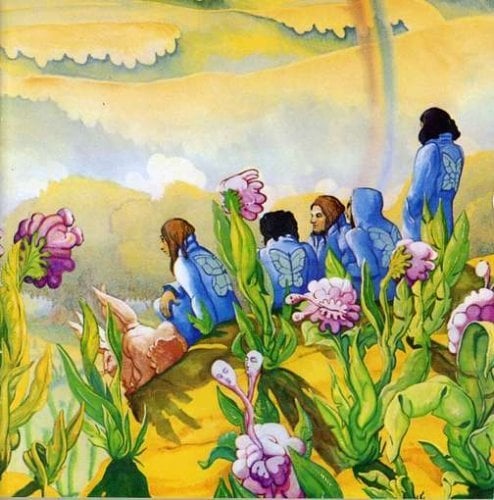
But Heritage, from the doofy cover art (seriously, look at it) to the light and inconsequential music, remains one thing my inner fanboy wishes I'd never have to call an Opeth album--a misfire.

-SJ

8.27.2011

Dir en Grey- Dum Spiro Spero


August 3, 2011; Firewall/The End
http://www.direngrey.co.jp/english/e-information.html

Dir en Grey are a hard lot to pigeonhole. Formerly one of the establishing bands of the visual kei scene in Japan, a subgenre defined by flamboyant (some would say downright fruity) dress as much as the distinctly Japanese mishmash of post-hardcore, goth balladry and metal most of those largely mediocre bands play, Dir en Grey have since expanded to Western shores and have gradually evolved into something distinctly different and far better. They are often unfairly shoved into the Hot Topic/nu-metal/metalcore ghetto for their dramatic (at times bordering on overwrought) and bleak lyrical imagery and videos, or more recently dubbed as pandering sellouts by many of the fickle J-fetishists who originally popularized them here for their more metallic stylings starting with the 2003 album Vulgar.

All this static aside, Dir en Grey are unusually popular for a foreign-language band in the U.S., and they make pretty damn good albums to support that popularity. Dum Spiro Spero is one of them, continuing the development into transcendent sonic juggernaut began by its predecessor Uroboros while possessing its own darker, thornier and more complex nature.

From the eerie minor-key piano and disturbingly hellish distortion of intro "Kyoukotsu no Nari," a direct antipode of Uroboros' "Sa Bir," this intention is announced pretty early on--and then it launches into "The Blossoming Beezlebub," which sounds like nothing else prior from this band. Superhuman frontman Kyo displays the full extent of his vocal range here, from choir-like, barely lucid chants to a freakish shriek and strangled moans over dark, sinuous guitar melodies courtesy of adept duo Kaoru and Die, all rendered with a washed-out, nightmarish mix. It feels far shorter than a seven-minute song has any right to.

I was initially somewhat disappointed with following track and single "Different Sense"--it begins much like a fairly average deathcore song, right down to Kyo's new deep gurgling vox, blastbeats, and even full-blown guitar hero solos (a first for this band)--yet by the middle it has evolved into a "typical" Dir en Grey sound, with the powerful soaring vocals fans have come to expect. It breaks interesting new territory for the band, even if it seems a little derivative on first blush. Both "Juuyoku" and ""Yokusou ni Dreambox" Aruiwa Seijuku no Rinen to Tsumetai Ame" (don't ask me to translate that) are more successful, the latter a miasma of churning midpaced sections punctuated by eccentric thrashing breaks with Kyo once again going fucking nuts. Anyone that can draw frequent comparisons to Mike Patton is doing something very right. "Lotus," the other major single, is a traditional Dir en Grey ballad filtered through their latter-day sophistication--among the best they've done in that style, and one of the few tracks on here that clearly falls into such easy labeling.

Then there is "Diabolos," the token schizo epic in the vein of the previous album's "Vinushka" or Macabre's title track (still one of the best things they've ever done), and while it's a strong track I don't think it quite makes it to that esteemed level. It isn't formulaic by any means, but other than a few new vocal turns and a beautiful, shimmering section close to the end it doesn't feel especially innovative. Still even an "average" DEG epic shits on most bands, and "Diabolos" hardly impairs the momentum of the album. After a few quicker, thrashing numbers that somewhat blend together, the last two tracks end Dum Spiro Spero very strongly--the somber and gorgeous "Vanitas," and "Ruten no Tou" which effortlessly blends soaring choruses, creeping verses, some blasting sections and a stunning outro in a way that makes it more representative than anything else on the album and would've made the most logical single in my estimation.

Bottom line, Dum Spiro Spero is another solid entry in DEG's growing oeuvre, and if it falls short of the excellent Uroboros in accessibility and standout tracks, its uniquely murky and cryptic ambience and full embrace of metal influences combined with the darker, heavier feel of earlier albums like Vulgar and Marrow of A Bone make it an inevitable grower and show that the band is committed to the experimental path they've forged for themselves. At this rate their future material promises to be something to behold, and here's to hoping that next time it doesn't take three goddamn years to drop.

-SJ

8.13.2011

Harmonium-Si on avait besoin d'une cinquième saison

1975; Polygram(defunct)

(Hey folks-it's been a while since I've reviewed something-2011 hasn't been blowing me away and I haven't talked about progressive rock in a while-so I decided to put up this review of one of my favorite prog albums from back in the day. This appeared slightly earlier on progarchives.com, and while I don't think anyone who reads this blog visits that site, I felt it was best to tell you just so you don't think somebody else ganked this if you ever wander across it on Google or something. Also, this one might be changed slightly for language and grammar and whatnot. Enjoy!)

Si On Avait Besoin D'une Cinquieme Saison, besides having one of the hardest-to-type titles of all time for non-native French speakers, is the rare album that deserves its lofty reputation and more, a work that is all at once grand, sweeping, warm and intimate. Virtually unknown outside of its native country of Quebec and hardcore prog circles, it is without question one of the most overlooked albums of the '70s and a triumph for folk music as well as of progressive rock.

Harmonium takes the folk elements of a group like Simon and Garfunkel and distills the weepiness from it, adding shades of jazz as well as symphonic elements that are fittingly august but tasteful and nuanced, leaving music that is emotionally charged but never overwrought or pitiful. Saison is a record that is truly joyful in places, with a coat of melancholy that keeps the experience layered.

More than that, it is an album that feels strangely private, like the band is putting on a special concert just for you. The vocals are often borderline whispered and even at its most grand the lack of percussion leaves the album feeling oddly compressed, as though it were composed in an open field but preformed in a small room. It leaves the music with a wistful quality that's hard to describe: The music feels like it was made to be bigger than the album that contains it, so instead of merely bursting to get out it scales itself back and translates all of its drama and glory into a form that's more easily expressed for recorded musical purposes. The effect is often nothing short of magical.

Speaking of magical, I'd be remiss if I didn't mention the album's centerpiece, and Harmonium's magnum opus as a band, the side-length "Histoires Sans Paroles," or "History Without Words." It's an apt title as the song proves to be a mesmerizing instrumental work, immaculately composed and lushly preformed, something akin to Pink Floyd's "Echoes" as played by Nick Drake. Cosmic yet pastoral, harrowing and somehow comforting at the same time, the song is one of contemporary music's most overlooked epics and the quickest 17 minutes of your entire life.

In a pair of genres rife with unambitious groups who are content to ceaselessly mimic their inspirations, Saison is the rare progressive rock album that is as beloved by diehards as it is by the casual listeners who stumble upon it; it's a testament to the creativity and innovation that can inhabit both the progressive and folk genres simultaneously, an olive branch between complexity and emotional resonance, and a heartwarming work that quiets troubled souls and puts worries at ease even as it supplies a stage for its own enthralling emotional ride. It's the musical equivalent of a soft kiss and it's an album that nobody who desires a balanced music collection can afford to miss out on.

-CJ

8.09.2011

1,2,3 - New Heaven


2011; Frenchkiss Records; Pittsburgh, PA


I think it would be apt to discuss how I came upon 1,2,3 and their debut LP “New Heaven” before I really dig into the record. It was late, I was a little bit high, and I happened to be hanging out in a turntable.fm room hosted by The Antlers. There I sat, nervous and just a bit sweaty, keenly aware that I was chatting (oh so casually) with two of my favorite musicians, and getting a first hand taste of their respective music collections. The room, as far as I could tell, consisted of Peter Silberman (the Antlers’ frontman) Darby Cicci (their keyboardist) a Frenchkiss Records staffer, an odd assortment of fans and lurkers, and Holly Miranda who popped in and out sporadically. Count me old-fashioned, but none of this felt right to me at the time- like the rest of us of course, I’ve become accustomed to the internet’s slow euthanization of pop-stardom, but this, this direct contact, made me feel predominantly… queasy.

Seven odd years ago when I first downloaded The Shins’ “Chutes Too Narrow” from Limewire (and subsequently launched my first flat-out band mania) I never imagined that via the internet I would one day interact so flippantly, so casually, with one of my favorite bands. The whole Antlers thing felt so run of the mill, so banal, that in retrospect, it was almost boring- that’s not how the prospect of meeting and greeting my idols used to feel. When I think about just how normal and how boring the whole thing really was, I feel a very palpable malaise, and I’ve since lapsed into a spell of cynicism with regards to the pop music, and the popstar-killing blog culture that surrounds and defines it.

Putting aside the distress that this whole phenomenon has caused me (and the difficulty of reconciling the Antler’s extraordinary music with the reality of their overwhelmingly ordinary lives) it’s worth saying that it was in this very turntable.fm chatroom that I first encountered 1,2,3’s absolutely infectious single “Confetti.” And so I promptly opened a new tab, and quickly discovered two things: a name like 1,2,3 is infuriatingly “un-googlable” and 1,2,3’s “New Heaven” is a deliberate, cohesive, more-than-impressive debut LP that has me convinced of band’s talent. In my mind, good pop music should do a number of things: it should establish a new, unique voice that’s at once recognizable but inimitable, it should be simple enough to hook you within a listen or two but complex enough to take on a new character with each new listen, and it should have lyrical focus and depth that’s at once nuanced and general. 1,2,3 hits the mark on all counts.

Let’s not pretend for the sake of “journalistic integrity” that I didn’t glance over several reviews of “New Heaven” before sitting down to write this piece- especially today, when online critical outlets posses the eminent ability to make a band likable (more so, arguably, than bands posses themselves) critical reception is fair game for criticism. Pitchfork’s Ian Cohen writes of “New Heaven” “it's pure populism down to their lyrical concerns: girls, drinking, or being broke as fuck…” The drinking, the girls, the poverty- it’s all there, but its not as general, or as trendy sounding as Cohen would have you believe. It all feels real- everything on “New Heaven” rings true, as Snyder’s lyrical style deftly blends a gentle wit with keen observation, a bit of paranoia, a fear of stagnation and finally, cautious optimism. Most importantly, the record’s lyrics convey a clear and direct sense of uncertainty that lucidly elaborates the paradoxes of blog-pop, and displays an understanding of personal insignificance that is rarely- rarely- coupled with such satisfying pop music. At its best, the lyrical style of “New Heaven” seems to articulate exactly how it feels to be both a mostly unknown musician, and a bored, confused kid. The nuance of the lyrics, which require a bit of effort to pick out (especially because none of 1,2,3’s lyrics are available online [a rare thing, these days]) will not be lost on any aspiring musicians.

And that’s just the thing- the ears to which New Heaven will probably find its way, will largely belong, I predict, to aspiring pop musicians and/or critcs- it’s funny, but doesn’t it feel like that’s the way it goes these days? As pop music become easier and easier to make, produce and share, the people who really enjoy pop music are making it themselves, and sharing it, and for the most part its not half bad. So as the internet democratizes the sharing process, records like “New Heaven” seem to get lost in the noise; but it feels like 1,2,3 realizes all of this, and accepts it, and as a result, the record is infused with a knowing sadness, a kind of heavy shrug, that’s truly surprising and delightful. I count New Heaven among the best LPs of 2011 so far.

7.24.2011

Tyler, the Creator - Goblin


2011; XL Recordings; Los Angeles, CA

Held up to his peers in the hip-hop world Tyler is a wimp. He talks extensively about his feelings, his unrequited love interest, jacking off, how he cuts himself, contemplates suicide, how he hates school, his missing dad. He appears on every single other indie music website, favorably or otherwise. White people may hate him, but white kids love him. He's skinny, wears skinny jeans, high socks, listens to Arial Pink, supports an off kilter fashion sense and green hats, talks about his asthma, plays piano, and hands out cupcakes to anti-violence organizations at Pitchfork Fest. He apologizes, acknowledges critics, adds disclaimers, talks to therapists. He breaks character as much as he has character in the first place. He has a tendency to swear on his life that he's a fucking unicorn.

Held up to his indie music peers (Goblin dropped on the same label as The XX, Vampire Weekend, Radiohead, M.I.A., Dizzee Rascal, and more), he's immature. He sports punk passion, minus the punk ethics, that went out of style with Nirvana, and shock tactics unseen and unwanted since the Butthole Surfers. His calling card, along with the rest of Odd Future, is the childish "Kill People, Burn Shit, Fuck School" and screams of "Swag". He his emotional self indulgence places him, in many's minds, alongside Insane Clown Posse. He has wild violent fantasies, and a heavy irresponsible streak, "I want to see a fucking mosh pit tonight. Fuck security. I don't give a fuck!"

Held up to normal human being standards, he's disgusting. He focuses his lyrics mostly on misogyny, date rape, ultraviolence, murderous rape, casual homophobia, and rape. He speculates about killing, in order, women of all sorts, his mother, any other authority figure, 2dopeboyz, Jesus, B.o.B., Bruno Mars, his friends, himself, and you. He pops Xanax like it's Tylenol and drops the term "faggot" more often than he drops the word "the".

He's also the only complete person in music today. And one of the only complete people in music ever, period. It always baffles me how we beg for multi-faceted characters in movies and one dimensional characters in real life. Pusha T is never gonna show the kind of internal conflict that Tyler does, and for good reason, he'd be laughed off stage. We want him to be one thing, one mood, a commodity that we can put on and always know what we're gonna get. But Tyler is a real person, and he doesn't censer himself. There's no real act. He's a fucked up kid so he writes lyrics about destroying everything, about rape and murder, but it also crosses his mind about how fucked up that is, and so that goes in the lyrics as well. And more often than not, especially on the title track "Goblin" you find yourself wandering around in Tyler's head, even more so than on "Bastard" before it, seeing everything that's going on. He snaps with incredible ease between his violent fantasy world, and the real world of girls that don't want him and critics coming down on his head and deep seeded depression. The man's fighting all the time.

And of course there's always a flip side with him, he is, famously, "A FUCKING WALKING PARADOX." And the flip side is that, despite all his emotional problems that bring this about, he is really fucking angry. Really fucking angry. At everything. And I can legitimize this through the rock cannon, site the Sex Pistols and Minor Threat and Fight Club and No Children and Doin' The Cockroach, but that would be backwards. Tyler is young and wants to burn down the fucking world, and no matter how immature that is, there is something vitally important in it being expressed. And he does it here in such an honestly fiercely angry way, the likes of which have been unseen in over a decade.

Now of the particulars of the album? Tyler consistently shows himself to be an incredible producer, creating thick ambient atmosphere to circle his off kilter beats over. And truly there are some incredible tracks. Surly you've already listened to the immaculate Yonkers, and if you haven't I urge you to run out and watch the video immediately. But there are downs to the album, you've probably heard already. It drops in the middle, with useless cuts like "Boppin Bitch" and "Fish" and sometimes it feels like the album as a whole has a hard time staying together. Bastard remains the better album. This is shit I would surly get on any rock band's case for, but here it hardly matters.

I often argue with people about the difference between skill and value, and truly a quick scan through every major genre of music will give you scores of people talented enough to do anything well, who just set out to the wrong goal. And doing crap with a high level of craft and skill is still crap. With Tyler the opposite persists, what he's trying to do is so novel and worthwhile that the fact that the album is poorly put together is almost a small technicality.

Goblin ain't an easy listen. It's not beautiful or quietly powerful or strained and moving. It's not a party album, and while it is fun, it's fun in a horrible, detestable way. It's not mature or melodically interesting. It's certainly not badass. But it's the most real and important thing out there right now.

7.23.2011

Quick Thoughts on Amy Winehouse's Death and the Vultures of the Rock Canon


It's hard for me to know how to feel about this.

On the one hand, I didn't care for Amy Winehouse's music particularly(she didn't drive me up the wall or anything, though) and I have no real connection with her work but it's always sad, for me at least, to see an artist die. Fewer voices in the world is never a good thing and it's always difficult to see someone spiral out of control with such finality, even if the writing had been on the wall for some time.

But my God are lazy rock journalists going to have a fucking field day with this. You know what's going to happen now, right? Back to Black is going to be lionized as a record for the ages, and dollars to donuts somebody at Rolling Stone is going to call her "this generation's Janis Joplin" or some other nonsense like that within the next year, and once that goes to print you're going to hear it parroted from coast to coast. A woman who had spent most of her career as a walking tabloid punchline is going to be a rock icon because she died at the same age Jimi Hendrix and Kurt Cobain did.

I know this is going to happen, because I know that codger-rock journalists thrive on nothing if not comparisons, and even the flimsiest ties to their boyhood idols(let's face it, most of these people are dudes) helps them settle into their own tastes more comfortably, serves as a way of reviving the mysticism they perceived their generation's music had, and what they believe is absent from ours. It's not that I have a problem with this because I have some notion that she doesn't "deserve" to be placed at the same table as other music icons who died at the same age; rather, I'm disgusted at the hypocrisy of music journalism as a whole, and that such a table has so much power to give credence to one's career. In a lot of ways I think that's more disrespectful to her memory than any smarmy joke about her crack habit; it's like saying she wasn't worth being valued before she died at the same age "proper" rock icons did, therefore making her a "proper" rock icon herself. Nobody gave a Texas shit about her drug addiction before she kicked the bucket, except maybe to laugh at it, and now that she's dead we've all gotta trade in our chuckles for thoughtful grimaces, now that we've got some of that old-school rock 'n roll mystique to wallow in. If rock mythology has taught us anything it's that there's no type of self-destructive behavior we can't glamorize, once we don't have to feel responsible for it anymore.

I think if you cared about her and want to honor her memory, or even if you don't but just have the slightest sense of decency, cut the 27 Club bullshit and let the woman's work live and die by its own merits. Quit trying to turn a tragedy into a championship. If it takes someone's death to bring that classic rock radio magic back into your life then there is something seriously fucking wrong with the way you listen to music. There's a disconnect between who Amy Winehouse was when she was alive and who she is, and is going to be, now that she's dead, that I find extraordinarily unsettling. Why are our idols only worth showing some humanity towards once we see them as corpses?

-CJ

7.22.2011

New Music From Zac Bentz!


Sorry I haven't been around too much these last few months, folks; work and other writing obligations totally got in the way of my amateurish list-making and petty ramblings, along with the fact that more or less nothing in 2011 is really interesting me so far. I'll have a pretty neat essay for you to read up soon, I promise.

Meanwhile, check out some new music from quintessential Styrofoam Boots darling Zac Bentz. One is a 40 minute remix of a Zoe Keating song(and frankly I can't think of two artists that would go together better than Zoe Keating and Zac Bentz) and the other is an ambient/drone reinterpretation of five songs from Portal 2. We love this guy over here at SB and these two new releases are completely free, so check them both out and give a relatively unknown but sure-to-be-rising talent some love.

-CJ