3.31.2010

Fang Island-Fang Island

2010; Sargent House Records

This is going to be a pretty short review. I'll explain why in a moment.

I think that the problem with most "happy" music-rock in particular-is that it forgets to have intensity of any sort. In attempting to get a smile out of the listener, it kind of loses its drive and power and is just sort of content to sit there.

This is not the case with Fang Island's self-titled debut. It positively crackles with electricity from start to finish, largely because of its streamlined indie rock meets math rock aesthetic. The group is labeled as "progressive rock" on Wikipedia, and I don't think that's quite accurate. While there are certainly progressive elements, this is an indie group to the very core. Listen to "Daisy", the first single and best song on the album, if you have any doubt that this band's priority is, first and foremost, delivering a good time to the listener.

And once again, the "rock" aspect of the progressive/indie rock label of the band is constantly evident. The guitar work may not technically be incredibly complex, but it's played with an energy that's joyous but also very tight, letting the synths and the chorale-esque vocal work carry just as much of the weight. And as rare as it is to find a good drummer in this genre, most of the drumlines can only be described as explosive. It's tempting to say that this music bursts, but it doesn't exactly. Everything is very coordinated, almost restrained, adding to the "electrical" feel of the album.

I mentioned earlier that this was going to be a pretty short review, and I'll tell you why: Fang Island, similar to Passion Pit before them(but far less embarrassing) have created an album that's close to critic proof, as much as I hate that phrase. I bought Fang Island the week it came out, and since then I've been struggling to write a review for it. This is music that's very hard to describe in professional terms, because it really wasn't built to be discussed, or listened to, in that capacity. To quote the band's website, this is "music for people who like music". This is an album that was designed specifically to get a purely emotional reaction of the most positive kind out of the listener, and it accomplishes that in spades. What I will say is that I think it's funny that I heard this album at the same time I was lamenting the modern state of both prog rock and indie rock, since Fang Island is a group that takes all the current problems with both of these very different genres and, miraculously, manages to kick both of them in the balls.

Here's the bottom line: You'll probably like this album. Hear it.

-CJ

3.30.2010

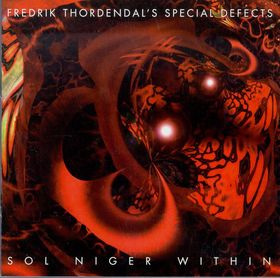
A Token of My Extreme: Fredrik Thordendal's Special Defects- Sol Niger Within Version 3.33 (1999)


Ultimate Audio Entertainment & Relapse Records; February 22, 1999
http://shop.relapse.com/artist/artist.aspx?ArtistID=10044

Meshuggah are a pretty outre band to meet mainstream acceptance in the music world. I use that parameter loosely, of course--you'll never find "Future Breed Machine" in the Top 40, or "Concatenation" on the American Idol playlist. But their avant-garde approach to extreme metal has been surprisingly well regarded by both critics and devout metalheads alike, and there has been a bumper crop of bands inspired by the wild polyrhythms and atonal, brutal 8-string heaviness of this unique Swedish five-piece.

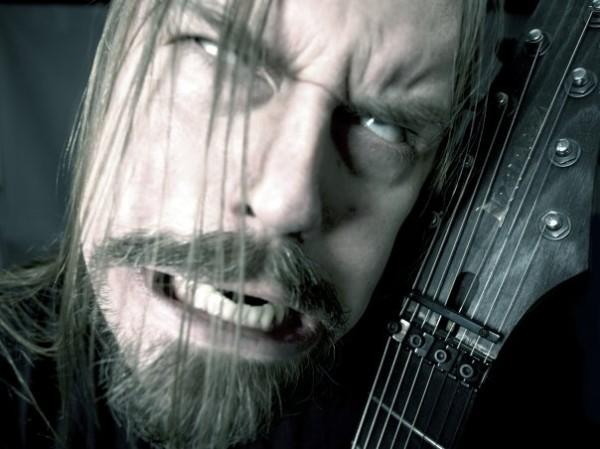
It's not too hard to see why. Meshuggah are one of those rare genre-breaking bands that have revised everything right down to the musical language. They represent a fresh break from most present-day metal--you will find no plagiarized Iron Maiden/At The Gates guitar harmonies, no Sabbath/Slayer/Metallica worship, no horrible clean vocals from some androgynous fuckhead in runny mascara and girl pants, and absolutely no teenage diary passages and roses 'n' razorblades imagery. They retain the core elements of pulverizing riffs and a foreboding nihilistic worldview, and then turn everything else upside down in a frighteningly technical, monolithic display of slowly fluctuating machine-like riffing behind Jens Kidman's inhuman roars; Tomas Haake's utterly baffling drumming; and Toki Wartooth lookalike Fredrik Thordendal's guitar solos, which are a mind-frying fusion of obscure virtuoso and jazz legend Allan Holdsworth and a supercomputer with epilepsy.

Let's linger a bit on that last point. Thordendal's work with a guitar has to rank as some of the most utterly creative I've heard on record, and if I had to stretch my mind hard enough to offer a weakness for Meshuggah, it's that there's never enough of Fredrik cutting loose.

Sol Niger Within is the remedy for that. Fuck yes it is.

Now, most solo careers from established acts (metal and otherwise) don't typically have a very good track record. While you'll occasionally stumble on some great solo albums (think Bruce Dickinson's The Chemical Wedding), most are forays into supreme self-indulgence, or are uninspired, rehashed affairs full of weak outside collaborators that only prove that the star's band of origin was greater than the sum of its parts.

Is Sol Niger Within self-indulgent? Well, let's see--in its original 1997 form pre-Version 3.33, Sol Niger Within was one huge 43-minute song titled "Antanca- The End (The Uncompounded Reality)" indexed into 29 tracks with bitchin' titles (to wit: "The Executive Furies Of The Robot Lord Of Death"). The Version 3.33 release axes a couple of those tracks and adds an 11-minute jam "Missing Time" and a rather pointless (both in length and title) bonus track "Ooh Baby Baby." Lyrically "Antanca" is basically a huge potpourri of every sci-fi theme Thordendal enjoys talking about (probably while smoking some most excellent reefer)--from alien abduction to the afterlife to evil Marvel demigod Galactus to the finite nature of the universe. This is mostly delivered through Thordendal's sinister and heavily distorted slithering vocal that is simultaneously less abrasive and far more disturbingly evil than Kidman's robotic growl. There are some spoken word passages as well.

So, self-indulgent? Sure, a little. But really, this album exists primarily as a showcase of ideas. Oh, and lots of blazing Fredrik performances. The man is all over his guitar neck here--one minute he'll be pounding out some excellent palm muted odd-time riffery (he overdubs his own rhythm guitar and bass), and then he'll spiral off into no-man's land with a staggering, alien solo that takes the ghost of free jazz and turns it into digital code, then a passage of faintly pretty but still discomforting minor-key guitar synth, and follow that up with a verse of sick existential musings while he plays an inexplicable imitation of a drill crossed with an air raid siren behind it. Suffice it to say, most contemporary guitarists will feel stingingly inadequate while listening to Sol Niger Within.

So will most drummers. Meshuggah skinsman Haake sits this one out, in favor of Morgen Agren of the Swedish duo Mats/Morgan. Lest you think Agren is some session hack chosen to make Thordendal simply look good, consider this--the man played with Zappa. Agren's performance is stupefyingly awesome. He combines Haake's internal metronome with a loose-limbed jazz/fusion delivery that makes short work of any complex odd-metered passage, layered fill, or elevator shaft-like time change. Agren functions as a supremely deft foil, trading off control and complementing Thordendal's wandering muse with rhythmic perfection. To add some flavor throw in some John Zorn-esque sax courtesy of Jonas Knutsson and discreet organ and synth touches by Mats Oberg on a few tracks, and you have an album for the ages.

This one-off (sorry guys, no Version 6.66 yet) wasn't just a springboard for Thordendal's apparent insanity either. A lot of ideas ended up being cannibalized for future Meshuggah albums--2005's Catch 33 revisited the 40+ minute song concept, and starting with 2002's Nothing the band opens up a bit more space for Fredrik's solos and a more organic feel to Haake's drumming. You can also hear ties to Meshuggah's prior work in selections like the conclusion "Tathagata," which revisits Thordendal's otherworldly guitar tonalities from Destroy Erase Improve's "Sublevels." In this light Sol Niger Within is best viewed not just as a standalone work, but as a lost Meshuggah album, and one that considerably advanced their evolution as a band.

... seriously though, were these guys separated at birth? Goddamn.

Translation:

Sadly this album's been out of print for quite some time, though should you acquire the means *cough*internet*cough*, Sol Niger Within comes highly recommended to Meshuggah fans, along with listeners of other progressive rock and metal bands--Cynic, Gordian Knot, Atheist, King Crimson, Behold... The Arctopus, etc. etc. etc.

If any of the bands I just mentioned are Greek to you, start with Meshuggah's Destroy Erase Improve and spend some time rewiring that pathetic organic brain of yours. Then you might be ready to give this album a go.

-SJ

3.27.2010

A Token of My Extreme: Naked City- Torture Garden (1990)


Shimmy Disc (1990) and Tzadik Records (1996)
http://www.tzadik.com/

[Note: This review is for Torture Garden only. I only used the Black Box cover art because the original art is definitely NSFW. I've never heard the Black Box companion piece "Leng Tch'e," which is apparently a long-form sludge metal composition very different from Torture Garden, but has the same lineup.]

John Zorn is practically the closest thing the avant-garde scene has to a superstar. A saxophonist, composer, and producer from Brooklyn, NY and college dropout who founded his own performance art project Theatre of Musical Optics in 1975, he's been hard at work mentally scarring listeners ever since. He's composed music for films, documentaries, cartoons, chamber musicians, full orchestras, jazz bands, and avant-garde ensembles both large and small. If a genre exists, he's probably played it straight, dissected it, deconstructed it, and blasted it back at us in skewered form a few times over. His body of work is fucking massive--I guarantee that this is not the last time you will see Zorn in this column.

Born in 1988 and lasting in its original form until 1993, Naked City is quite possibly his most famous project and maybe even his most definitive. Featuring the hugely talented core personnel of guitarist Bill Frisell, keyboardist Wayne Horvitz, bassist Fred Frith, drummer Joey Baron and the mighty Zorn himself on alto sax, on Torture Garden Naked City play what can be basically described as the sound of a radio with a broken tuner--in a mental asylum. It's a huge noisy postmodern splatter of every genre under the sun, molded into mostly sub-minute "grindcore miniatures" executed with astonishing precision that sound almost totally improvised, but are actually sheet music. The 52-second "Speedfreaks" exemplifies Naked City's genre-bending mission, switching from style to style in bursts often lasting no more than 4 or 5 seconds, and the other 41 (!) songs on here are similarly manic and marked by Zorn's trademark sax screams, which sounds like Anthony Braxton or late-period Coltrane being raped by a bull.

If this isn't crazy enough, enter Yamatsuka Eye. Frontman of equally demented Japanese avant-garde collective Boredoms, Eye's vocals are anything but singing in the conventional sense. He howls, he gibbers, he yells, he shrieks, he roars, he laughs maniacally, he pretty much straight flips the fuck out over all 25 minutes of the record. Most of the time he just pushes the band over the top with a random interjection of vocal anarchy, but sometimes he duets with Zorn's atom-smashing blowing and the result is like having a cordless drill shoved into your face.

Despite the utter intensity of the material and the appropriately graphic, S&M-inspired song titles (which are sometimes strangely onomatopoetic), there is an irrepressible sense of fun and humor to Torture Garden not found in the vast majority of avant-garde recordings. Oftimes Zorn will spend a few additional seconds with a genre or play with a melody a bit, and the result is hilarious and entertaining--consider the honky-tonk break of "NY Flat Top Box," the quixotic and goofy charm of "The Prestidigitator," or the moody jazz opening of "Speedball." Even if this music is defiantly obnoxious to the outside observer, they can't deny that the sheer cartoony mania of it is good for a laugh or two. And open-minded jazz aficionados will appreciate the mind-blowing chops and interplay on display.

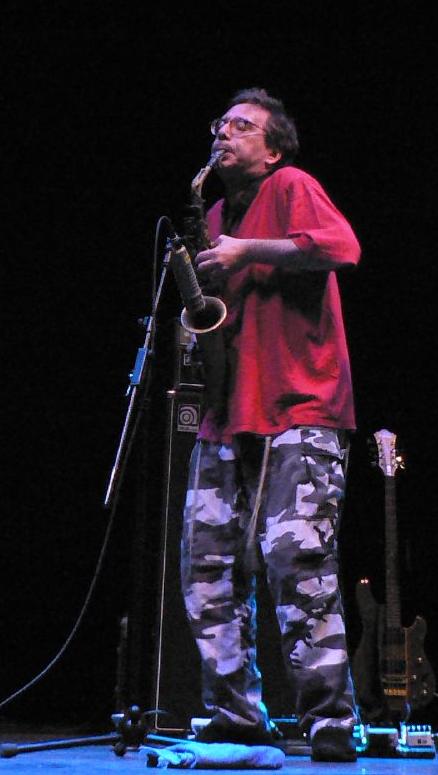
All told, not too shabby for a guy that looks like this eh?

Translation:

For listeners into metal or punk (or Mr. Bungle fans for that matter), Torture Garden along with Naked City's considerably more sedate self-titled debut (which shares a few tracks from this album) are actually a pretty good point of entry into Zorn's work. Otherwise, newcomers might want to try out a few other recordings--The Big Gundown and Spillane, tributes to classic Western composer Ennio Morricone and French New Wave auteur Jean-Luc Godard respectively, are both excellent and with much less ADHD. Either way, once you become a Zorn fan you will eventually end up here. It's just too good to pass over.

-SJ

3.22.2010

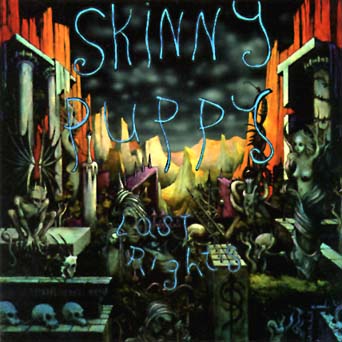
A Token of My Extreme: Skinny Puppy- Last Rights (1992)


Nettwork; June 30, 1992
http://www.skinnypuppy.com/

For a solid decade and a half, Canadian imports Skinny Puppy were at the forefront of a budding industrial scene. Compared to the art-damaged ugliness and depravity of Throbbing Gristle and SPK and the spine-rattling Germanic jackhammer stomp of Einsturzende Neubaten and Laibach, second-generation contributors Skinny Puppy may have sounded slightly lusher and more organized, but with tracks carefully stacked around collages of clever tape manipulation, disturbing samples, and angular, jagged beats over Nivek Ogre's heavily distorted serial killer vocal stylings, they were clearly not intended for the Top 40. Despite this, pretty much every good modern industrial act cites their music and their over-the-top, Grand Guignol live performances as an inspiration (especially Nine Inch Nails), and the poorer ones regularly rip off SP without acknowledging it.

They were the yin to Ministry's industrial metal yang, their rage inverted into attacks against the brutality of animal experimentation, the military-industrial complex, environmental destruction and drug addiction--not that Ogre, Cevin Key, and primary collaborator Dwayne Goettel were teetotalers by any means, all three had done more heroin and LSD in their lifetimes than a room full of Deadheads, and while their most fertile period of creative power occurred mostly while under *ahem* heavy influences, 1992's Last Rights was pretty much where they went completely off the deep end. To the point where by '96 and their last real album The Process (I refuse to count post-'96 Skuppy recordings) was released, they had spent four years as human chemistry sets, catatonic in the studio or on hiatus while constantly fighting with each other, and all this ended up claiming Goettel, who OD'd in 1995 two months after Ogre's short term departure.

As you can imagine from being born in an environment like that, this is one terminally fucked up album. Even by their previously high standards of fuckedupness.

Last Rights basically takes the already abrasive, darkly psychedelic and corrosive elements of the previous album Too Dark Park (a widely acknowledged classic) and abstracts them into walls of pulverizing, chaotic sound that bring industrial back to its noisy roots but still retain the beat wizardry that defined Skuppy's niche. Not many albums have achieved the balance between disturbing brutality, sonic experimentation, and sheer listenability that Last Rights has, and all without a single prominent guitar (unless you count the arresting acoustic chords that startlingly pop up in the intro of "Scrapyard" before the horror really starts).

The album is split into two general halves, front-loaded with the more concise tracks you could sort of call "songs," I guess, if free verse soundtracks to watching snuff films while having the worst acid trip of all time counts as such. The second half gets progressively more and more insane and less organized, culminating with the 11-minute opus "Download," which finally ditches the beats and any sense of rhythm or structure and launches into a totally unhinged collage of samples that will make you crawl under your furniture.

Only two tracks were slated to become underground singles--the smoldering creepiness of "Love In Vein," with its warped Victrola intro morphing into a crashing minimalist rhythm and a heavily reverbed wash of sinister strings and synths, and the most dance-oriented track and outcry against animal abuse "Inquisition," driven by the album's most propulsive beat (via torque wrench, natch). "Killing Game" is the most accessible after these (and in my opinion the finest song on the album)--backed by deceptively pretty minor-key piano juxtaposed with moody bass and synths becoming gradually louder and more fractured, Ogre rips into the most tortured, emotive vocal performance I've ever heard from him. It will make the hair on your arms stand up. Immediately following that is "Knowhere?," a determined, terrifying march of hallucinogenic noise--perhaps the most oppressive four minutes on any Skuppy LP.

Last Rights is the album Trent Reznor wished he could've made, once upon a time (instead he churned out the wildly overrated The Downward Spiral, which is barely harder than an average KMFDM album). To this day there is very little in the industrial genre that approaches this--a brainpan-scraping, horrifying tableau of 20th century ills in musical form, yet with a level of twisted beauty and sonic craftmanship that emanated straight out of Dwayne Goettel's scorched mind. It's a far cry from the fucking lame and regressive industrial dance pastiche of New SP, that's for damn sure.

Translation:

Too Dark Park. Start there. If you can handle that, Last Rights is the next logical step.

-SJ

3.21.2010

A Token of My Extreme: Autechre- Confield (2001)


Warp Records; April 30, 2001

http://warp.net/records/autechre

Sean Booth and Rob Brown's brainchild Autechre is, in many ways, the standard bearer of "intelligent dance music" (IDM), which, along with being an embarassingly condescending and highfalutin label to apply to yourself, is basically code for envelope-pushing electronic music that only androids could dance to. While there are beats often shared by the likes of more conventional house and techno music, they are often in time signatures you'd have to send off to NASA to calculate. Often cold, oppressive, and not terribly fun, this is music for the left side of your brain to dissect, not for dry humping on club dancefloors.

The end result sounds like it would be boring. Confield, the duo's sixth full-length record, is anything but.

See, most IDM is indeed cerebral, but it still sounds like the programmed work of humans using a colorful palette of electronic beats and samples. Take Aphex Twin, for example--even on his most out-there soundscapes, Richard D. James' twisted humor still prevails in the form of a quirky sample or deliberately obnoxious noise and gives them a human grounding, even if somewhat detached. Autechre, on the other hand, don't so much make music as they transcribe the gray, monochromatic language of machines, and Confield is basically the sound of those machines flipping out on acid.

This is extremely abstract stuff. Ofttimes on Confield there aren't even BEATS per se, just spliced pulses of sound that falter and skip haphazardly throughout the track, or strange rumbling, grinding or twinkling noises (the first thing you hear is "VI Scose Poise"'s main synth line, which sounds like a metal ball bouncing inside a huge pipe). In "Pen Expers," an obscure melody gradually insinuates its way in only to be overwhelmed by the surrounding textures, flailing in its death throes against a merciless storm of chopped-up beats. The dissonant synths and distant tremors of "Eidetic Casein" eventually coalesce into the soundtrack of a horror film, circa 2105. The most challenging track "Lentic Catachresis" sounds like two computers having a very heated argument, glitchy screams getting louder and louder over the course of nine minutes and ending as abruptly as it started. Even the most accessible track "Cfern" has an ominous feel as its splintered beats and bell-like melody speed up and gradually mutate into something dark and foreboding. But there is still beauty in these fractured transmissions, albeit a very alien variety.

Despite its daunting inaccessibility, this is one of the least calculated-feeling releases in Autechre's growing oeuvre. Earlier releases like Tri Repetae have a more logical feel about them--beats and melodies the result of tried and tested formulas, resolving in a cold, predictable manner. While they are still excellent albums, they sound more sterile--music designed to evoke clean, modernist sculpture. Confield is dark, scattered, fucked up, the sound of breakdown and decay. It feels like electronic free jazz, you never know what to expect even on a third or fourth listen.

It's somewhat telling that the duo hit a wall after this polarizing album, and decided to add more a bit more structure and ambient leanings to future recordings lest they fall off the edge into sheer noise, territory better reserved for the likes of Akita Merzbow. But in the meantime, Booth & Brown have unwittingly (or knowingly?) created the soundtrack of a grim dystopian future--not the post-apocalyptic atavism of Mad Max, but a world where nanotech has consumed humanity and all that's left are the self-aware machines that have already begun their descent into mindless decadence and seething malevolence.

Yes, I know I'm not Philip K. Dick. I'll shut the fuck up now.

Translation:

Hoo boy. This is a very tough album to like, considering it has functioned as a line in the sand for Autechre fans after nine years on the market. Good luck for anyone else.

If you're new to Autechre, I'd recommend starting with Tri Repetae++ (it includes the original album plus two excellent EP's, Anvil Vapre and Garbage). The albums before that (Amber, Incunabula) lean more toward the melodic and ambient side, while the albums after that get progressively tougher peaking with Confield, then a bit more accessible (but still pretty challenging). The 2008 release Quaristice is a nice synthesis of their latter-period sound with some of the earlier ambient leanings, so it wouldn't be a bad second choice. If you're new to electronic music however, Autechre is definitely not the first stop I'd recommend. Try some Squarepusher (Feed Me Weird Things is an IDM essential) or Aphex Twin (particularly Ambient Works Vol 1 & 2, and maybe the Richard D. James Album) before coming here.

-SJ

3.20.2010

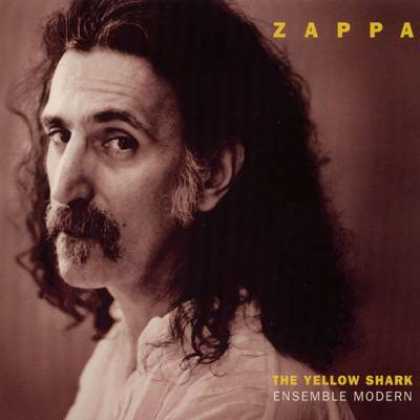
A Token of My Extreme: Frank Zappa & The Ensemble Modern- The Yellow Shark (1992)


Zappa Records/Rykodisc; September 17-28, 1992
Alte Oper, Frankfurt; Philharmonie, Berlin and Konzerthaus, Vienna
http://www.zappa.com/

Frank Zappa was a legend among musicians, and even in my usual wild flights of shitty hyperbole, that is not a label I apply lightly.

You'd be hard pressed to find a composer ("songwriter" doesn't quite do him justice--he wrote SHEET MUSIC, y'see) more prolific, more talented or more genre-encompassing in the 20th (or any other) century. Since the mid-1960s to his sad death from prostate cancer in 1993, he had recorded albums of rock, doo-wop, jazz fusion, modern classical, musique concrete, soundtracks for film, solo guitar and everything in between--he had a staggering 57 live and studio albums under his belt
while he was still alive, and the process of clearing out the Zappa vaults has resulted in an additional twenty-three posthumous releases (bringing the total to 80). 2Pac had nothing on FZ. With a discography like that, you can expect at least a few classics, and Zappa had more than his share. Which brings us to this review.

One of the man's last releases and the last live recording,
The Yellow Shark is firmly in the classical genre, yet this isn't classical as most people know it. There are two kinds of classical music--the stodgy baroque composers of centuries past that made beautiful but somnolent music for Heaven's waiting rooms, reserved for music students, the old, the traditionalists, and the elitists who won't listen to anything made past 1900; and truly exciting, boundary-pushing, and defiantly unorthodox composition from the last century that shares only the instruments with Beethoven, Mozart and Tchaikovsky. Zappa belongs on the same page with greats like Stravinsky, Bartok, Schoenberg, and Varese (who was FZ's idol) with this album.

In other words, if you're looking for the Frank of "Don't Eat The Yellow Snow," "Broken Hearts Are for Assholes" or "Valley Girl," he ain't here. Don't expect a single kickass guitar lick, Eddie & Flo's vocal stylings, pastiches of pop music, or even much of FZ's own voice. His trademark vulgar and sociopolitical wit can still be found on a few tracks (most notably the spoken-word "Welcome To The United States") but it is strictly sidelined by the Ensemble Modern's stunning performance, which takes Zappa's music composed for synclavier from albums like
Jazz From Hell and translates it to the human element with surprising success, considering it was not designed to be played by flesh-and-blood musicians in the first place.

That all said, this never feels cold or pretentious by any means. In the hands of the EM,
Yellow Shark has Zappa's signature--a tight angularity juxtaposed with a goofy, off-kilter whimsy, with melodic yet dissonant arrangements that feel like they're wandering even when they're not. There are reworkings and reimaginings of his jazz-rock work ("Dog Breath Variations," "Uncle Meat," "Pound for A Brown," "Be-bop Tango"), full-blown modernist classical ("Outrage At Valdez," "Times Beach II & III," "Exercise #4" "The Girl In The Magnesium Dress"), a work for two pianos ("Ruth Is Sleeping") and string quartet ("None of The Above"). All of it is excellent, to the point where you actually get annoyed by the inclusion of the spoken-word pieces at the end of the album (though "Welcome To The United States" has an absolutely HILARIOUS musical quote from "Louie, Louie" that makes sitting through the goofy voices and lame humor a lot easier to swallow).

However, the real treat follows shortly after. The incongruously titled "Get Whitey" is one of the prettiest FZ compositions since "A Watermelon in Easter Hay"--as stately and beautiful as Zappa ever got. And the truly rousing and ridiculously hard to play (Zappa actually cautioned the EM from even trying it at first) "G-Spot Tornado" ranks as a fitting finale to FZ's 30-year career, as the audience rose to their feet with a 15-minute ovation. Musicians decades from now, classical and otherwise, will still find this album to be truly groundbreaking stuff, and FZ wouldn't have had it any other way.

Translation:

Yellow Shark
is just about the last thing you want to hand a Zappa neophyte... unless they really, really like classical. In which case it might be the first.

Still,
Hot Rats is the starting point I recommend to everyone, so you might as well begin there if you haven't heard any FZ yet. Following that up with a dollop of his other early '70s fusion work (Waka Jawaka, The Grand Wazoo, Burnt Weeny Sandwich) and a few of his weirder ones (Lumpy Gravy, Jazz From Hell, Weasels Ripped My Flesh) is also a good idea. Yellow Shark is sometimes viewed as the culmination of the man's work and for good reason, but it's definitely not easy going. Once you're firmly indoctrinated in the Cult of Zappa though, you will fucking crave this album. Trust me.

-SJ

3.18.2010

These New Puritans - Hidden

2010; Domino Records; Essex, England


"Elvis" is what tipped me off to These New Puritans, and it was indeed a strike to the head. Though at first glance they seemed like just another young British post-punk doppelganger, it was clear after just one spin of the single that they were something else. And sure, comparisons to Gang of Four and The Fall abounded, but their rhythm centric flow, their repetitious shouted paranoid lyrics - and lines like "If there is a god, then please take me up!" - not to mention their general art school yet street culture aesthetic put them above the rest. Right?

Not so much. We waited with anticipation as their first album 'Beat Pyramid' dropped on Domino - the record label that was home to scene-defining heavyweights Franz Ferdinand and Arctic Monkeys - and our excitement was proven to be more or less misplaced. Instead of being brilliant in its repeated lines and beats we found merely empty chanting. Instead of the artistic paranoia we had lyrics like "she's into numerology, she's into astrology, she's into phenomenology" and the yawn inducing "what's your favorite number, what does it mean?" over and over again. It was too easy to see that they were trying to be intellectual and mystical and eerily ambiguous, but they just came off as bull shit. Like that girl who's always trying to figure out people based on their sign, or wants to tell you about some native american view on the truth behind dreams from a book she skimmed through.

Looking at the album, one brilliant song, a few good songs, filled out with sort of interesting BS, we could only ask if this band was serious, or if they were fucking kidding us. That was in 2008.

In December of the next year the music video for "We Want War" arrived, the first single of These New Puritans second effort, and all I could think was 'are you fucking kidding me'. or perhaps 'what just happened here?' because truly this was unlike anything we could possibly expect. Between its desperate electronic circles and battle drums, not to mention some under mixed lyrics that were truly and brilliantly cryptic and paranoid, it was hard to deny that this band was indeed serious. Perhaps the most serious band alive in a time filled with irony and detachment and tung-in-cheek music.

Because I don't live in the band's country of origin, I had a long three month wait until I could hear the rest of the album. It did not disappoint, in fact quite the opposite could be said of it. While sitting around listening to it a friend of mind jokingly snuck up and snatched my cd player away from me, then walked away. I didn't bother chasing him. He returned five minutes later with shocked and incredulous look on his face. Wide eyed, he asked me what this music was. That's basically the feeling it imparts. It is truly hard to believe.

The mood of the album shifts back and forth from paranoid to passionate, from war music to songs of cerebral dissonance, from attacking the outside world to barring the windows and fighting to keep the world from attacking you. The instruments are switched up on us as well. Deviating from the post-punk standard of guitar, key, and heavy amounts of drums - with a bit of samplers and loops throne in, this album instead favors strong choruses of brass and woodwind above a modified gunshot beat and electronics. But don't be mistaken, this is not a hybrid with classical music, the instruments here are reworked and repurposed, sounding nothing like their traditional timbre. There is very little guitar.

And so what we're left with is a long, exhausting, powerful, painful length of sound, fit for violence or for sadness. Something transparent and accessible, but also like almost nothing you've ever herd before. And something finally delivering on the promise of Elvis. Fuck yes.

the world might disappear